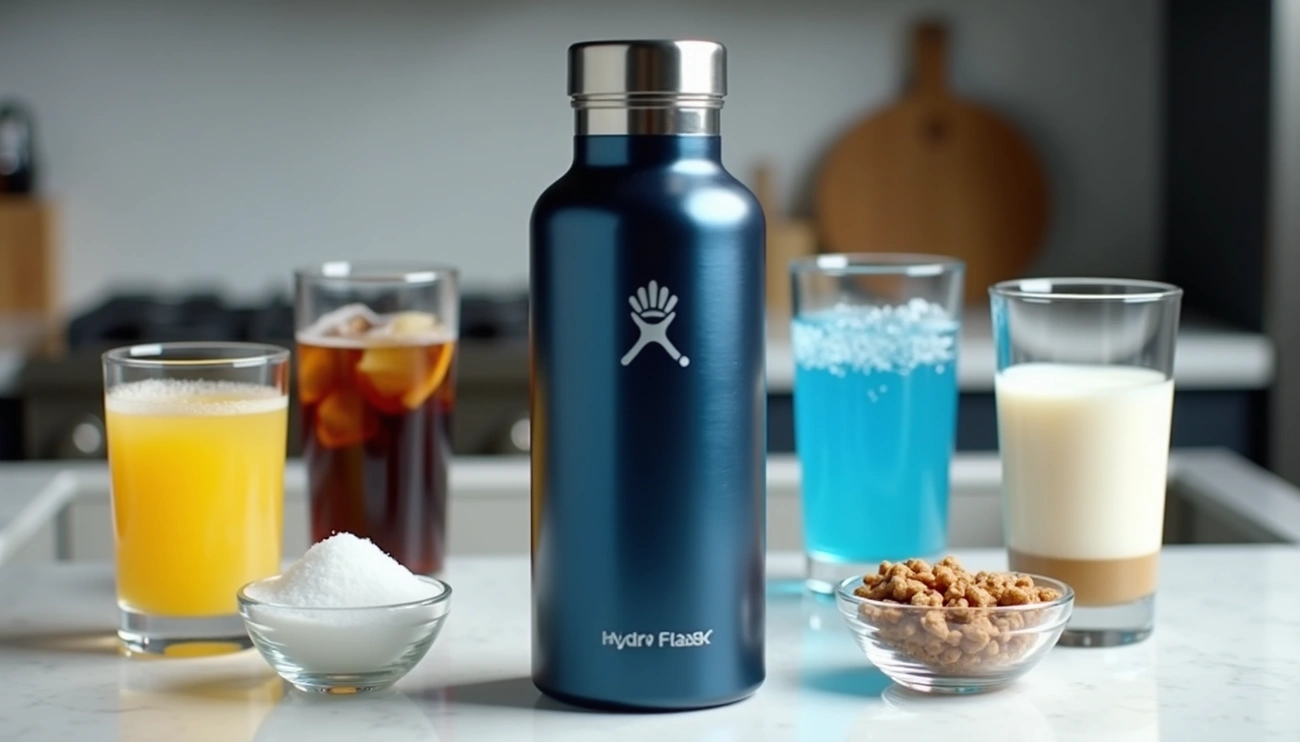
You should not fill a Hydro Flask water bottle with boiling liquids, carbonated drinks, dairy or milk, highly acidic beverages, or chemicals like bleach. Boiling liquids damage seals, carbonation causes pressure buildup, dairy spoils quickly, acids can corrode over time, and chemicals create safety risks. Avoid freezing or microwaving the bottle.
Corrosive and Chemical Substances to Avoid
Stainless steel water bottles aren’t invincible, especially when exposed to certain chemicals. Your Hydro Flask’s durability relies on a thin chromium oxide layer that protects the metal underneath – and specific substances can destroy this protective shield.
Bleach and chlorine-based cleaners
The number one enemy of your Hydro Flask is bleach. This isn’t just a casual recommendation – it’s critical information. Bleach contains sodium hypochlorite that aggressively attacks the protective chromium oxide layer on stainless steel. Once this barrier is compromised, the exposed metal becomes vulnerable to rust and corrosion.
According to research, even premium 304-grade stainless steel (the same used in Hydro Flasks) can only tolerate about 2 ppm of chlorine continuously at room temperature. Consequently, using bleach or chlorine-based cleaners for cleaning your bottle will significantly shorten its lifespan and may void your warranty.
Pool water and chlorinated water
Thinking about refilling your Hydro Flask at the pool? Think again. Pool water contains chloramines used for disinfection that attack your bottle’s protective layer, leading to:
- Pitting corrosion (small holes penetrating the surface)
- Brown staining from oxidation
- Stress corrosion cracking in severe cases
Studies on stainless steel in swimming pool environments confirm that even premium grades show visible corrosion damage after prolonged exposure to chlorine. Additionally, the official Hydro Flask care guide specifically warns against using chlorine.
Saltwater or heavily salted liquids
Saltwater presents an even greater threat than chlorinated water. The chloride ions in salt directly break down the passive chromium oxide layer that protects your bottle. Research indicates that chloride levels above 100 ppm significantly increase corrosion risk in stainless steel, and seawater contains roughly 19,400 ppm chloride.
Through a process called electrolysis, the high salt content accelerates pitting and corrosion. Over time, this will degrade your Hydro Flask’s performance, potentially leading to your hydro flask not keeping water cold as effectively as before.
If you must temporarily store saltwater in an emergency situation, clean your bottle thoroughly afterward with a baking soda solution to neutralize the corrosive reaction.
Acidic and Reactive Beverages
Beyond obvious corrosives, many everyday beverages can gradually damage your Hydro Flask. Understanding the pH scale is essential – neutral is 7.0, with lower numbers indicating higher acidity that can corrode stainless steel over time.
Highly acidic drinks like lemon juice and soda
Even high-quality stainless steel isn’t immune to prolonged acid exposure. Research shows that beverages with a pH below 4.0 can trigger electrochemical reactions leading to corrosion. The alarming fact? Approximately 93% of commercially available beverages fall below this threshold.
The danger zone includes:
- Lemon juice (pH 2.0–2.6)
- Cola/Coca-Cola (pH 2.6–2.7)
- Orange juice (pH 2.9–3.4)
- Sports drinks like Gatorade (pH 2.9–3.7)
These acidic drinks facilitate electron transfer from metal to acid, creating pitting corrosion. Over time, this process exposes raw steel, causes metal leaching, thins the interior lining, and leaves a permanent metallic taste. Brief storage (a few hours) is generally safe, but overnight or multi-day exposure is where real damage occurs.
Vinegar-based beverages and dressings
Vinegar contains acetic acid that’s equally harmful to your bottle’s interior. The irony? While diluted vinegar makes an excellent cleaner for brief exposure (five minutes maximum), storing vinegar-based drinks or salad dressings can corrode your Hydro Flask.
A half cup of white vinegar for cleaning should only contact your bottle for five minutes, yet many vinegar-based beverages sit inside bottles for hours or days, potentially causing lasting damage.
Alcohol stored for more than 2-3 days
Hydro Flask actually produces beer growlers and wine tumblers, so alcohol itself isn’t harmful. However, duration matters greatly. Most alcoholic beverages have an acidic pH under 4.0 due to fruit extracts, sugars, and carbonic acid.
After approximately three days, alcoholic beverages develop a subtle metallic taste. Moreover, the air pocket above the liquid affects flavor through oxidation, with wine particularly vulnerable to degradation.
For best results, only use your Hydro Flask for same-day alcohol consumption. If you need longer storage, glass remains the gold standard for preserving taste and preventing your hydro flask from losing its insulation properties.
Spoilage-Prone Liquids
The insulated design of Hydro Flasks creates unique challenges with perishable liquids that might not be immediately obvious.
Milk and dairy-based drinks
Dairy products present significant risks in insulated bottles. Initially, you might think your Hydro Flask keeps milk perfectly safe, yet this creates a dangerous illusion. Hot milk deteriorates rapidly in insulated containers, with studies showing that milk kept at elevated temperatures for 3-4 hours will spoil. This environment accelerates bacterial growth, potentially causing diarrhea and indigestion.
Even cold milk requires caution. Unlike clear containers, Hydro Flasks hide visual spoilage signs, making contamination undetectable.
Protein shakes and smoothies
Protein supplements create unique problems. Certainly, Hydro Flask makes dedicated 24oz shaker bottles with mixing balls, but these require immediate cleaning after use. Protein residues stubbornly cling to steel surfaces, fostering bacteria that may lead to your hydro flask not insulating properly over time.
For smoothies, pre-chill your flask with ice water 10-15 minutes before filling to maximize cold retention.
Soups with high salt content
Soup lovers beware – pathogen growth accelerates in temperatures below 130°F. High-sodium soups present additional challenges as salt compounds interact with stainless steel. For safety, heat soup to at least 160°F before adding to a preheated flask.
Properly stored, soup should remain safe for about two hours – anything longer risks both your health and bottle integrity.
Pressure and Heat-Related Risks
Pressure variations inside your Hydro Flask can create serious safety hazards beyond simple insulation failure. These hidden risks often catch owners by surprise.
Carbonated drinks stored for long periods
Placing carbonated beverages in your Hydro Flask creates an invisible threat. Carbon dioxide builds pressure inside the sealed container that can lead to unexpected lid failures. This pressure intensifies when the bottle warms up, potentially causing:
- Lids popping off without warning
- Difficulty opening due to pressure lock
- Leaks developing around gaskets
- Explosive eruptions when opened
For safety’s sake, if you must use your flask for fizzy drinks, consume them within a few hours rather than overnight. Open the lid gradually to release pressure and never shake before opening.
Hot liquids in lids not designed for heat
Not all Hydro Flask lids can handle high temperatures. Filling with boiling water creates dangerous pressure buildup, primarily with standard flat caps. This can make removing the lid extremely difficult—and potentially hazardous.
Even heat-rated lids need proper handling. I recommend allowing boiling water to cool slightly before sealing and “venting” once or twice after filling. Otherwise, plastic components may warp, compromising your bottle’s leakproof seal.
Freezing liquids inside the bottle
Placing your Hydro Flask in the freezer is a critical mistake. Indeed, freezing damages the vacuum-sealed layers between stainless walls over time. As liquids expand during freezing, they create uneven forces that the steel cavities weren’t designed to withstand.
Repeated freeze cycles deteriorate vacuum layer integrity, subsequently reducing insulation performance. Even brief freezing exposure risks permanent damage to your hydro flask’s ability to keep drinks at desired temperatures.
Conclusion
Taking proper care of your Hydro Flask means understanding what should never go inside it. Certainly, these durable water bottles offer excellent temperature retention, but they aren’t suitable for every liquid.
Acidic drinks gradually corrode the internal stainless steel, while chlorinated and salty liquids attack the protective chromium oxide layer that keeps your flask pristine. Meanwhile, dairy products and protein shakes can create hidden bacterial growth, particularly due to the insulation properties that maintain ideal temperatures for microorganism development.
Though brief exposure to these substances might cause minimal damage, long-term storage leads to serious problems. After all, the goal is to maintain your flask’s performance for years, not months. Most importantly, pressure-related risks from carbonated drinks, extremely hot liquids, or freezing contents can create actual safety hazards beyond simple performance degradation.
