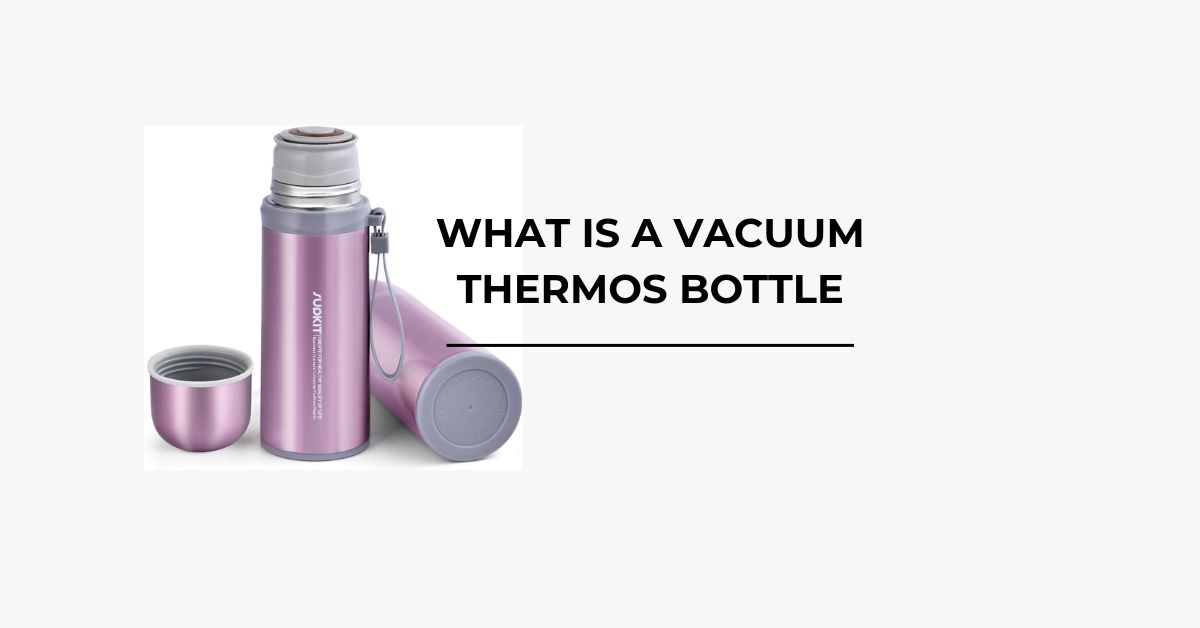
A vacuum thermos bottle, also known as a vacuum flask, is an insulated water bottle designed to keep beverages hot or cold for a long time. It is made of food-grade stainless steel using modern technology. The bottle’s inner and outer walls are separated by a vacuum (an airless space) that prevents heat transfer. This is why drinks maintain their temperature for extended periods. It is especially designed for travelers, gym-goers, and outdoor enthusiasts.
How Does A Thermos Work?
A thermos works by creating a vacuum between two walls that blocks heat transfer through conduction and convection. The double-walled construction prevents air molecules from carrying heat away from your beverage.
This design exists because Scottish scientist James Dewar discovered that removing air creates near-perfect insulation. Without air molecules to transfer energy, heat stays trapped inside the container for extended periods.
The result is remarkable temperature retention, keeping hot drinks warm for 12-24 hours. Your morning coffee stays drinkable throughout the day because the vacuum acts as an invisible barrier against temperature change.
Who Invented The Thermos?
Sir James Dewar invented the vacuum flask in 1892 while working on cryogenic experiments at Cambridge University. He needed a container to store liquefied gases at extremely low temperatures without rapid warming.
Dewar created his invention out of necessity for scientific research rather than commercial purposes. His experiments with liquid oxygen and nitrogen required containers capable of maintaining extreme cold for extended periods.
Interestingly, Dewar never patented his creation, which allowed others to develop it commercially. This decision ultimately benefited millions of people who now enjoy temperature-stable beverages daily.
Is Thermos A Trademark?
“Thermos” with a capital T remains a registered trademark, but the lowercase “thermos” became a generic term in the United States. A 1963 court ruling declared that everyday usage had stripped the word of its trademark protection.
This happened because the company’s own aggressive marketing backfired over the decades. From 1907 to 1923, Thermos actively encouraged people to use its brand name for all vacuum flasks.
The legal consequence transformed trademark law forever and serves as a warning to brands today. Companies like Google and Velcro now actively discourage generic usage of their names to avoid similar fates.
What Is A Dewar Flask?
A Dewar flask is the scientific name for vacuum-insulated containers used in laboratories worldwide. Scientists prefer this term to honour James Dewar, the original inventor of vacuum insulation technology.
Dewar developed these flasks specifically for storing liquefied gases at temperatures approaching absolute zero. His laboratory containers needed to maintain temperatures as low as -196°C for nitrogen storage.
Today, Dewar flasks remain essential equipment in research facilities and medical laboratories globally. They store everything from liquid nitrogen for cryopreservation to helium for MRI machines and scientific experiments.
How Do Flasks Insulate?
Flasks insulate by eliminating the three methods of heat transfer: conduction, convection, and radiation. The vacuum between walls stops the first two, while the reflective coating handles thermal radiation.
Heat naturally moves from warmer areas to cooler ones through touching surfaces and moving air. By removing air and preventing direct contact, vacuum flasks create an extremely effective thermal barrier.
The silvered or reflective inner coating repeatedly bounces heat radiation back into the flask. This mirror-like surface minimizes energy loss, keeping beverages at their original temperature for much longer.
What Materials Are Used?
Modern thermos bottles are typically made of stainless steel, borosilicate glass, or a combination of both. Each offers distinct advantages depending on durability requirements and intended use.
Stainless steel became popular because it withstands drops, dents, and rough handling during outdoor activities. The metal also provides excellent structural support, helping maintain the vacuum seal over the years of use.
Borosilicate glass offers superior taste neutrality and resists chemical reactions with acidic beverages. However, its fragility makes it better suited for careful home use rather than adventurous outdoor applications.
How Long Do They Last?
Quality vacuum thermos bottles typically last between 5 and 10 years with proper care and maintenance. High-end models from reputable manufacturers can exceed this range by a significant margin.
The lifespan depends largely on how the flask is used, stored, and cleaned regularly. Drops, dents, and improper handling can damage the vacuum seal, reducing insulation effectiveness immediately.
Signs of failure include rapid temperature loss, condensation on exterior surfaces, and unusual sounds when shaken. When beverages cool within hours instead of maintaining temperature all day, replacement becomes necessary.
Can They Keep Cold?
Yes, vacuum thermos bottles keep cold beverages cold just as effectively as they keep hot drinks hot. The same vacuum insulation prevents external heat from entering and warming your iced drinks.
The physics works identically in both directions because vacuums block heat transfer regardless of flow direction. Your cold water stays refreshing because ambient warmth cannot penetrate the insulating barrier.
Many users report ice lasting 24-48 hours in quality vacuum bottles during the summer months. Cold retention often exceeds heat retention because the temperature differential with the surroundings is typically smaller.
Why Vacuum In a Thermos?
A vacuum eliminates air, the primary medium for heat transfer by conduction and convection. Without air molecules between walls, heat has almost no pathway to escape or enter.
Regular insulation materials like foam or fabric still contain trapped air pockets that conduct heat slowly. A vacuum removes this limitation entirely, creating insulation superior to that of any solid material.
This principle makes vacuum insulation approximately 10 times more effective than traditional insulating methods. The technology enables all-day temperature retention that foam-insulated containers simply cannot match.
How To Clean a Thermos?
Clean your thermos by rinsing with warm, soapy water after each use and air-drying completely before storage. Regular maintenance prevents odour buildup and bacterial growth inside the container.
Stubborn stains respond well to baking soda mixed with warm water, left overnight inside the flask. White vinegar solutions also effectively remove mineral deposits and lingering coffee or tea stains.
Avoid abrasive scrubbers, bleach, and dishwashers, as they can permanently damage interior coatings and seals. Store flasks uncapped to allow air circulation and prevent musty odours from developing over time.
What Is Double Wall?
Double wall refers to two separate layers of material with a gap between them in thermos construction. This gap contains the vacuum that provides the exceptional insulating properties.
The inner wall holds your beverage while the outer wall provides structural protection and handling comfort. Both walls are sealed together only at the neck, minimizing heat conduction pathways.
This construction creates the iconic thermal performance that makes vacuum flasks so effective worldwide. The double-wall design has remained essentially unchanged since its invention over 130 years ago.
Who Commercialized It?
German glassblowers Reinhold Burger and Albert Aschenbrenner commercialized the vacuum flask in 1904. They recognized the everyday potential of Dewar’s laboratory invention and made it practical for consumers.
Burger and Aschenbrenner had previously manufactured scientific glass devices for Dewar’s experiments. Their expertise enabled them to add protective metal casings and develop a robust, everyday design.
They held a naming competition, selected “Thermos” from the Greek word for heat, and founded their company. The American Thermos Bottle Company later brought mass production to consumers, selling over 15 million units by 1911.
What Is Vacuum Insulation?
Vacuum insulation is a technology that uses an airless space between two surfaces to prevent heat transfer. This method creates the most effective thermal barrier achievable with current technology.
The principle works because heat cannot conduct or convect without a medium to carry it. By removing air and creating a near-vacuum, manufacturers eliminate two major heat transfer pathways simultaneously.
This technology extends far beyond beverage containers into refrigeration, building construction, and aerospace applications. The same physics that keeps your coffee hot also insulates spacecraft and cryogenic storage systems.
How Does Heat Transfer?
Heat transfers through three mechanisms: conduction, convection, and radiation, which vacuum flasks specifically target. Understanding these processes explains why thermos technology works so remarkably well.
Conduction occurs when heat moves through direct physical contact between molecules in solid materials. Convection occurs when heated fluids, such as air or water, physically move and carry thermal energy elsewhere.
Radiation transmits heat as electromagnetic waves that travel through space without needing any medium. Vacuum flasks address all three: vacuum blocks conduction and convection, while reflective surfaces minimize radiation losses.
Conclusion
A vacuum thermos bottle is an insulated container designed to maintain the temperature of its contents for extended periods. By creating a vacuum between double walls, it minimizes heat transfer through conduction and convection, keeping hot drinks hot and cold drinks cold. This simple yet effective design makes vacuum thermos bottles ideal for everyday use, outdoor activities, and travel, ensuring beverages stay at the desired temperature longer than regular containers.
