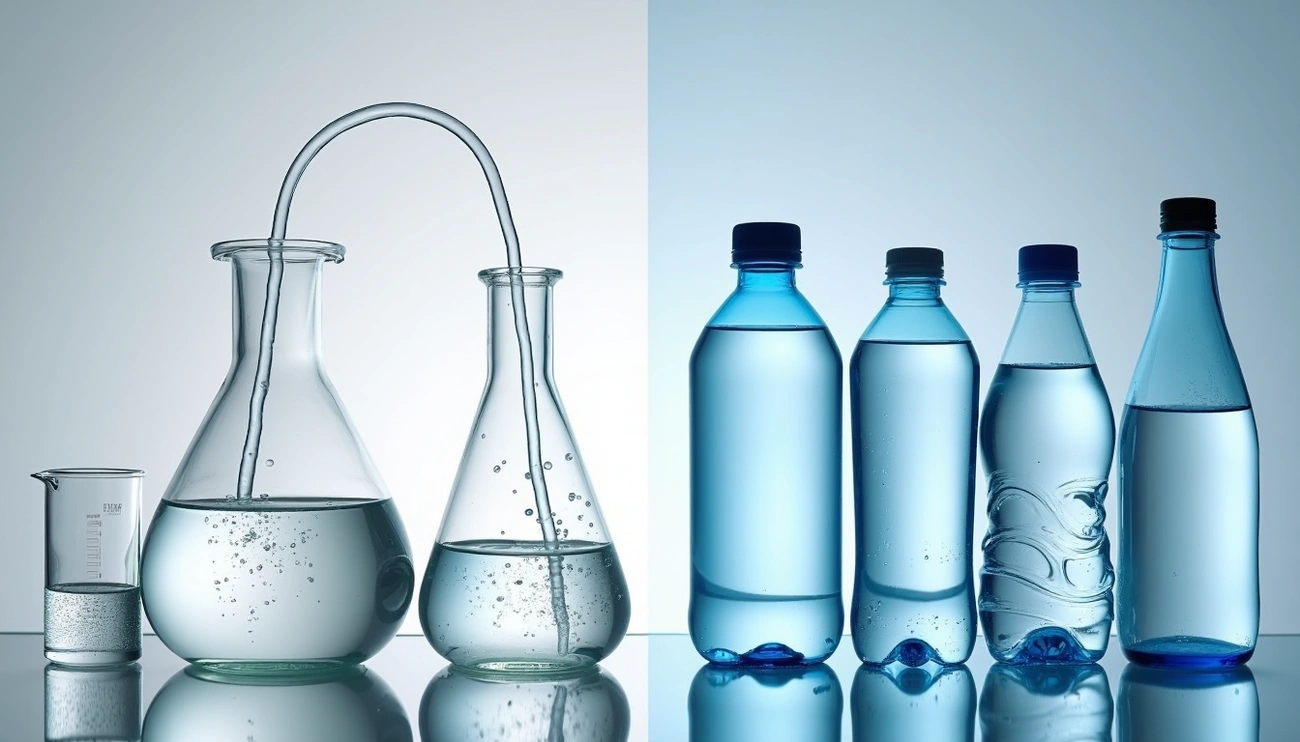
Most bottled water is not distilled. Bottled water usually comes from spring, purified, or municipal sources and undergoes filtration, reverse osmosis, or UV treatment. Only bottles specifically labeled “distilled water” are produced through distillation and lack minerals like calcium and magnesium.
What is distilled water, and how is it made?
Distilled water stands as one of the oldest and purest forms of treated water available. Initially created through a process that mimics Earth’s natural water cycle, this type of water undergoes a specific purification method that removes virtually all contaminants.
The distillation process is explained.
Distillation follows a simple yet effective three-step process:
- Boiling: Water is heated to its boiling point (100°C/212°F), transforming the liquid into steam. Since water evaporates at a lower temperature than most contaminants, the impurities remain behind in the original container.
- Condensation: The steam rises and travels through a cooling system (typically a stainless steel condenser), where its temperature drops. As it cools, the steam reverts to liquid.
- Collection: The condensed water, now free from most impurities, is collected in a separate, clean container. Many commercial distillers include carbon post-filters to remove any remaining volatile organic compounds.
This process effectively eliminates approximately 99.9% of bacteria, viruses, protozoa like Giardia, and harmful chemicals such as lead and sulphate. Home distillation can be achieved with simple equipment—a large pot with a lid, a smaller pot, water, and ice.
What makes distilled water different from other types
Distilled water is nearly mineral-free, unlike tap or filtered water. The process removes calcium, magnesium, sodium, and more, affecting several properties:
- Purity level: Distilled water has extremely low total dissolved solids (TDS) of less than 1 PPM.
- Electrical conductivity: Typically ranges from 2 to 5 μS/cm, considerably lower than tap water’s 200-800 μS/cm range.
- pH level: Slightly acidic (around 5.8) because it absorbs small amounts of carbon dioxide from the air, forming traces of carbonic acid.
Furthermore, distilled water lacks the flavour-giving minerals present in most drinking water, often resulting in a flat, tasteless quality. Due to the absence of minerals, it can also be somewhat corrosive to certain materials.
Is bottled water distilled?
Many consumers pick up bottled water, assuming it’s gone through the same rigorous purification process as distilled water. First of all, let’s clarify – most bottled water is not distilled.
Understanding bottled water labelling
The Food and Drug Administration (FDA) regulates bottled water as a consumer food product with strict standards of identity. According to FDA labelling rules, several distinct categories exist, including:
- Bottled water/Drinking water
- Mineral water
- Spring water
- Purified water (which can include distilled water)
- Artesian water
- Sparkling bottled water
FDA rules require the water type to be listed on all bottled labels. To know if it’s distilled, check for “distilled water” on the label.
Is all bottled water distilled?
Absolutely not. ‘Bottled water’ encompasses three main types that have undergone different filtration or purification treatments. Generally, bottled water undergoes some form of treatment, typically reverse osmosis. Only some bottled water products have undergone distillation.
The FDA recognizes multiple types of purified water, including those produced through distillation, deionization, or reverse osmosis. Although some brands do sell distilled bottled water, it’s relatively rare.
Why most bottled water is not distilled
Most bottled water isn’t distilled mainly for taste and nutritional reasons. Distilled water’s acidic taste is unpopular, even if minerals are added back.
Additionally, the cost and time required for water distillation on a commercial scale make other treatment systems far more favourable. Bottled water manufacturers generally prefer to retain some mineral content both for flavour and potential health benefits.
Most importantly, bottled water is intended for drinking, whereas distilled water is primarily intended for other uses, such as medical applications or appliance use.
Distilled vs bottled water: Key differences
The fundamental differences between distilled and bottled water extend beyond their production methods, ultimately impacting their uses and value to consumers.
Source and treatment methods
Distilled water is derived from boiling municipal water, collecting the steam, and condensing it back to liquid form. This rigorous process removes 99.9% of minerals, chemicals, bacteria, and other contaminants.
Bottled water, in contrast, falls into three main categories: spring water, mineral water, and purified drinking water. Most bottled water undergoes filtration processes rather than distillation because manufacturers aim to preserve essential minerals that affect taste and nutritional value.
Mineral content and taste
Perhaps the most notable distinction lies in mineral composition. Distilled water contains virtually no minerals, giving it a characteristic “flat” taste. Conversely, bottled mineral waters can contain calcium, magnesium, and sodium levels ranging from less than 200 mg/L to more than 700 mg/L.
These minerals significantly impact flavour—one reason many consumers prefer the taste of bottled water. Moreover, some bottled water companies add minerals “for taste,” primarily to mask potential plastic flavours from packaging.
Common uses and applications
Distilled water excels in specialized applications where purity is paramount:
- Medical equipment (CPAP machines, dialysis)
- Laboratory testing
- Automotive cooling systems
- Household appliances (irons, humidifiers)
Meanwhile, bottled water is primarily intended for convenient drinking. Certain mineral waters can provide up to 30% of daily calcium and magnesium requirements per litre, making them nutritionally beneficial beyond simple hydration.
Cost and availability
Distilled water costs $0.84-$1.50 per gallon, or $0.23-$0.68 if made at home. Bottled water generates plastic waste. Home distillers can pay for themselves in 2-3 years.
When should you choose distilled water over bottled water?
Choosing between distilled and bottled water depends largely on your specific needs. First and foremost, there are several situations where distilled water’s exceptional purity makes it the only appropriate choice.
Medical and appliance use
Medical professionals use distilled water extensively for sterilizing surgical instruments. For home medical equipment, distilled water is especially important for CPAP and BiPAP machines, as tap or bottled water can cause mineral buildup and bacterial growth. Additionally, distilled water is ideal for wound cleansing, dental procedures, and first-aid applications.
Sensitive health conditions
People with compromised immune systems, particularly those with HIV/AIDS or certain cancers, face increased risk from water contaminants. Indeed, distilled water can help prevent migraines, heartburn, and arthritis symptoms in sensitive individuals. Furthermore, regular consumption of distilled water may benefit those who require exceptionally pure hydration, free from chemicals and pesticides.
Situations requiring high purity
Labs and pharmaceuticals require distilled water for testing and production. Other uses include:
- Portable humidifiers and neti pots
- Steam irons and haircare tools
- Aquariums (with added mineral supplements)
- Car cooling systems and lead batteries
- Cleaning without leaving mineral streaks
Ultimately, whenever absolute purity outweighs the benefits of mineral content, distilled water proves superior to standard bottled water.
Conclusion
Understanding the distinction between distilled and bottled water allows us to make better choices for our specific needs. Undoubtedly, the confusion stems from their similar appearances, but as we’ve seen, these water types serve fundamentally different purposes.
Distilled water stands out for its exceptional purity, having undergone a rigorous process that removes virtually all minerals and contaminants. Therefore, it excels in medical applications, laboratory settings, and household appliances where mineral-free water prevents damage and contamination. Though slightly acidic and flat-tasting, its near-perfect purity makes it irreplaceable for specific uses.
Conversely, bottled water primarily serves as convenient drinking water, retaining beneficial minerals that contribute to both taste and nutrition. The FDA regulates different categories of bottled water, though most undergo filtration rather than distillation. This explains why bottled water typically tastes better while providing small amounts of essential minerals, such as calcium and magnesium.
