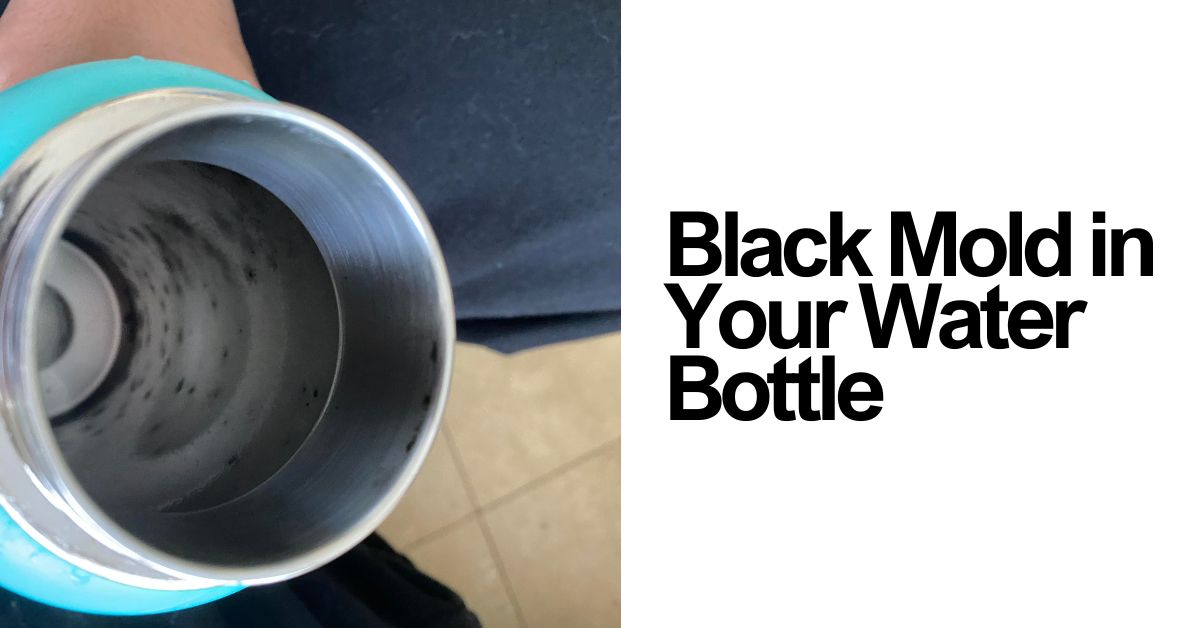
Black mold in your water bottle is dangerous because it can cause allergic reactions, respiratory irritation, and digestive issues. Drinking from a mold-contaminated bottle increases exposure to mycotoxins and bacteria. Clean bottles daily with hot water and soap, and replace bottles with persistent mold growth.
In this article, we’ll explore why black mould grows in water bottles, the potential health risks associated with consuming contaminated water, how to identify mould in your bottle, and effective methods to clean and prevent this common problem.
What is black mould, and why does it grow in water bottles
The fuzzy black spots in your water bottle aren’t just unsightly—they could be part of a complex fungal ecosystem. Let me explain what’s really growing in that forgotten bottle at the back of your desk.
What is black mould?
Black mould belongs to the fungus family and occupies a unique biological niche, neither plant nor animal. Most references to “black mould” point to Stachybotrys chartarum, one of the most toxic mould species among the over 100,000 types that exist in our world.
Despite its name, this mould often appears greenish-black and typically emits a distinctive musty, earthy odour reminiscent of rotting leaves or dirt.
Although individual mold spores remain invisible to the naked eye, they become visible once enough gather in one place. Consequently, by the time you notice that thin black film on your bottle’s mouthpiece, a substantial colony of spores has already formed.
Why water bottles are ideal for mold growth
Your water bottle unintentionally creates the perfect environment for mold to thrive. Here’s why:
- Constant moisture – The obvious ingredient in any water bottle
- Dark environment – Most bottles are opaque or stored in dark places
- Warm temperatures – Body heat and ambient temperatures provide ideal conditions
- Food sources – Every sip leaves behind skin cells and food particles
Furthermore, the mouth contact with your bottle introduces organic particles that serve as excellent food sources for hungry mold spores. Once a microscopic spore lands in this environment, it essentially “wins the moldy lottery dream home”. Within just 24-48 hours, given the right conditions, these dormant spores can transform into active, growing colonies.
Common types of mold found in bottles
Although Stachybotrys chartarum (black mold) commonly grows in water bottles, it represents just one of thousands of possible species. Mould in water bottles can appear in various colours—green, gray, brown, black, yellow, red, or white.
A vital misconception to address: no single colour definitively identifies a “dangerous” species. Even “common moulds” like Aspergillus, which aren’t naturally toxic, can produce harmful mycotoxins under certain conditions. Therefore, regardless of colour, any mould growth in your bottle warrants immediate attention and proper cleaning.
Health risks of drinking from a moldy water bottle
Discovering those dark spots in your favourite water bottle can be alarming. But what exactly happens when you consume mold unknowingly? Let’s explore the health implications.
Can mould in a water bottle make you sick?
Yes, drinking from a moldy water bottle can potentially make you sick, though reactions vary significantly between individuals. Ingesting mold can irritate your stomach and digestive system, leading to cramps, nausea, or diarrhea. However, the severity depends on factors such as the type of mould, its concentration, and your individual susceptibility.
Most healthy people won’t experience severe issues from occasional exposure. Nevertheless, continuous consumption of mould-contaminated water can lead to persistent health problems.
Mold in a water bottle symptoms
If you’ve been drinking from a contaminated bottle, watch for these common symptoms:
- Respiratory issues: Coughing, wheezing, shortness of breath
- Sinus problems: Congestion, runny nose, throat irritation
- Digestive disturbances: Stomach cramps, nausea, diarrhea
- Allergic reactions: Itching, sneezing, watery eyes
- Advanced symptoms: Chronic fatigue, rashes, brain fog, mood swings
One TikTok user reported bronchitis, a sore throat, and sinus infections after prolonged exposure to undiscovered mould in her water bottle, which eventually required emergency care.
Who is most at risk?
Specific individuals face heightened dangers from mold exposure:
People with compromised immune systems are significantly more vulnerable. Additionally, those with developing immune systems, asthma, allergies, and the HLA-DR gene typically experience more severe reactions.
Short-term vs long-term exposure effects
One-time exposure to small amounts of mould is unlikely to cause lasting harm. In contrast, long-term exposure can lead to chronic symptoms as your immune system becomes overwhelmed by continuous mould particle exposure.
Unlike encountering occasional outdoor mould spores that your body can easily manage, drinking repeatedly from a contaminated bottle forces your immune system to face “an army” of mould particles daily.
For most individuals, proper cleaning after mould is discovered should resolve the issue. However, seek medical attention immediately if you experience persistent or worsening symptoms.
How to tell if your water bottle has black mold
Spotting mold in your water bottle before it becomes a health issue requires careful attention to several telltale signs. Even when black mold isn’t immediately visible, your senses can alert you to its presence.
Visible signs: black spots or film
Most commonly, black mold appears as fuzzy or slimy patches that may be green, black, brown, or even white in colour. These spots typically develop along the bottle’s interior walls, around the rim, or in hard-to-reach crevices.
Often, mold first establishes itself in the gasket or o-ring seal inside the lid—the most neglected part during cleaning. Examining your bottle with a flashlight can help detect early growth, as mould patches sometimes blend with the bottle’s colour.
Unpleasant smell or taste
Your nose knows trouble before your eyes can see it. An earthy, musty odour emanating from your bottle, even after washing, strongly indicates mould contamination. Likewise, if the water in your bottle suddenly tastes strange or unpleasant, mould might be the culprit. According to experts, this smell typically precedes visible signs, serving as an early warning system.
Cloudy water or residue
Clean water should look clear. If the liquid in your bottle appears cloudy or murky without explanation, mould spores may be present. Additionally, a thin film or residue coating the bottle’s interior walls signals potential contamination.
Biofilm and what it means
That slimy texture inside your bottle? It’s called biofilm—a complex community of microorganisms encased in a self-produced matrix. Biofilms form within just 48 hours and provide a protective environment where bacteria communicate and multiply.
This sticky substance harbours numerous microbes, including mould, creating a reservoir that can release contaminants into your water with each sip.
How to clean and prevent black mold in your water bottle
Keeping mold at bay requires ongoing vigilance. Let me walk you through proven methods to ensure your water bottle stays clean and safe.
Daily and weekly cleaning routines
To combat black mould in water bottles effectively, I recommend washing your bottle with hot, soapy water daily—or at a minimum, every few days. For weekly maintenance, a deeper clean is essential. Studies show the average reusable bottle contains a shocking 40,000 times more bacteria than the average toilet seat. Bottles with straws are even worse, harbouring 14 times more bacteria than pet feeding bowls.
Using vinegar or boiling water
White vinegar proves remarkably effective, killing 82% of mould spores, bacteria, and viruses. Mix equal parts white vinegar and warm water, soak overnight, then wash thoroughly. For metal bottles, fill with boiling water and let sit for several hours to eliminate mould and odours.
Breaking down bottle parts for deep cleaning
Please pay special attention to sealing components, as they can easily trap moisture. Disassemble all removable parts—lids, straws, rubber components—and clean thoroughly. These hidden areas often become hotspots for mold growth.
Drying completely to prevent mold
Proper drying is the most critical yet overlooked prevention strategy. Even small amounts of residual moisture make bottles susceptible to mold. Always store bottles uncapped to allow complete air circulation. In fact, insufficient drying creates ideal conditions for mould within 24-48 hours.
Choosing the right bottle material
Stainless steel offers superior mold resistance compared to plastic. Its non-porous surface prevents tiny cracks where bacteria can hide, and it withstands regular cleaning without degrading.
Using antimicrobial technology
Modern bottles increasingly feature built-in antimicrobial protection. This technology actively inhibits bacterial and mould growth around the clock, providing continuous defence against microbial contamination. Benefits include odour control, stain resistance, enhanced durability, and greater convenience.
Conclusion
Black mold lurking in your water bottle presents genuine health concerns that deserve attention. Throughout this article, we’ve seen how these reusable containers inadvertently create perfect breeding grounds for potentially harmful fungi. Although occasional exposure might not severely affect healthy individuals, those with compromised immune systems face significant risks from regular contact with contaminated bottles.
Therefore, maintaining proper bottle hygiene must become part of your daily routine. Regular cleaning with hot, soapy water effectively eliminates most mold spores before they establish colonies. Additionally, complete disassembly of all bottle components ensures no hidden areas harbour unwanted growth. Most importantly, allowing your bottle to dry thoroughly prevents the moisture that mould needs to thrive.
The material of your bottle also plays a crucial role in mold prevention. Stainless steel offers superior resistance compared to plastic alternatives, while newer antimicrobial technologies provide continuous protection against fungal invaders.
