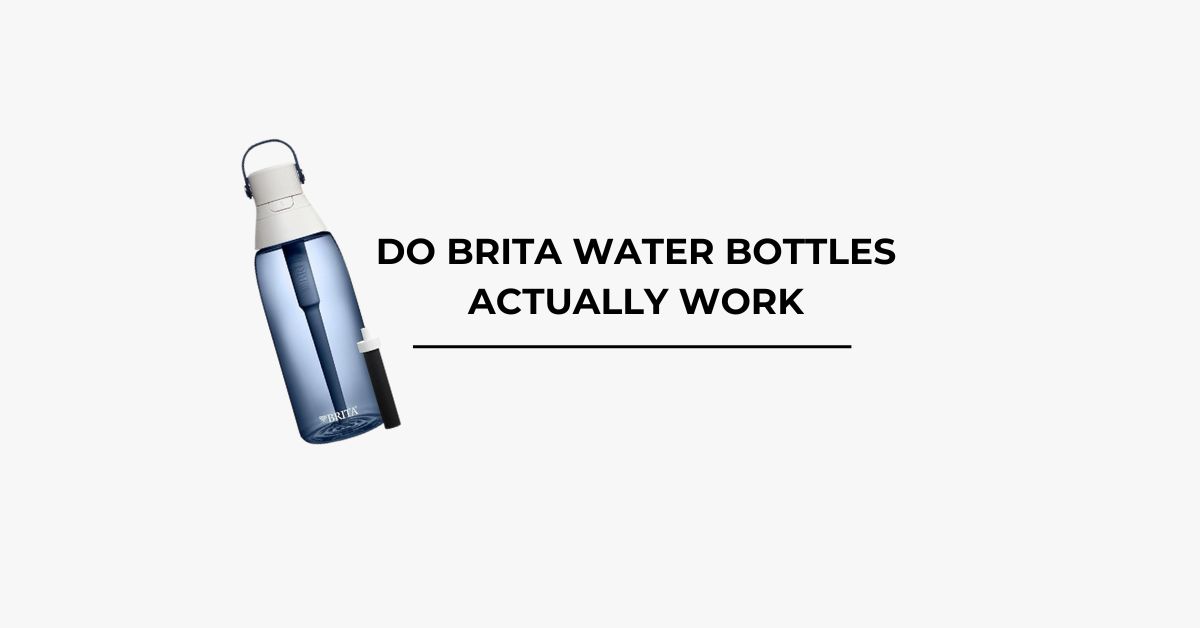
Yes, there is no doubt about its purifying power. Brita actually works and purifies water. However, as a regular filter bottle, it cannot remove all harmful elements from tap water, such as bacteria, viruses, microplastics, or pharmaceuticals. It can, however, remove chlorine, copper taste, odours, and reduce other contaminants like lead, making the water safely drinkable up to 99%.
Do Brita filters produce spotless water?
Yes, Brita filters genuinely clean water by removing chlorine, lead, mercury, and copper through activated carbon technology. Independent studies confirm they reduce lead to safe drinking levels. Most users notice better taste immediately.
However, Brita filters have limits. They won’t remove bacteria, fluoride, or pharmaceuticals from your tap water. Replace filters every 2 months to prevent bacteria from harbouring and reduce water quality.
Do Brita water filter jugs actually work?
Yes, Brita filter jugs do work. They remove up to 99% of chlorine and lead using activated carbon technology. A 2022 survey found 85% of users noticed better-tasting water after switching to Brita.
That said, these jugs have boundaries. They won’t filter out bacteria, fluoride, or most pharmaceuticals. Change filters every 2 months—old filters can harbour bacteria and degrade water quality.
Do Brita filters work on hard water?
No, standard Brita filters don’t soften hard water—they target chlorine and heavy metals, not the calcium and magnesium that cause hardness. You’ll still get limescale buildup in kettles and appliances.
In hard-water areas, Brita’s MAXTRA PRO Limescale Expert reduces scale 50% better than regular filters. But for serious hard-water problems, you’ll need a dedicated water-softening system instead.
How does the Brita bottle filter work?
Here’s how the Brita bottle filter actually works:
- Brita bottle filters use activated carbon and ion-exchange resin to clean water.
- Activated carbon removes chlorine, impurities, and foul odours.
- Ion-exchange resin removes heavy metals such as lead.
- The filter improves taste and makes water safer to drink.
- Water flow is slowed to increase contact with filter materials for better cleaning.
- Regular filter replacement is needed to maintain performance.
- Brita bottles offer a portable, eco-friendly way to get fresh-tasting water wherever you go.
What do Brita bottles remove?
Brita water bottles remove chlorine taste and odour, plus Class VI particulates like sand, sediment, and rust. The activated carbon filter also reduces copper, cadmium, and mercury from your tap water.
Brita bottles don’t remove everything, though. They won’t filter out lead, bacteria, fluoride, or pesticides. These filters work best for improving tap water taste—not for purifying untreated water sources.
Are Brita bottles effective?
Yes, Brita bottles effectively remove chlorine taste and odour, as well as particulates, from tap water. Independent testing confirms they work well for municipal water sources. Most users notice cleaner, better-tasting water immediately after filtering.
However, Brita bottles have limits. They won’t remove bacteria, lead, or heavy metals like pitcher filters do. They’re designed for treated tap water only—not for purifying well water or natural sources.
Do Brita bottles remove chlorine?
Yes, Brita bottles remove chlorine from tap water. Their built-in carbon block filters reduce chlorine taste and odour by 92-99%. Brita holds NSF/ANSI 42 certification, which confirms effective chlorine reduction for better-tasting drinking water.
The activated carbon traps chlorine molecules as water passes through the filter. For best results, replace your Brita bottle filter every 40 gallons or two months. This keeps filtration working properly and prevents bacteria buildup.
Can Brita bottles remove lead?
No, standard Brita water bottles do not remove lead. Their bottle filters use carbon-block technology designed solely to reduce chlorine taste and odour, as well as particulates. Lead requires more advanced filtration that portable bottles lack.
For lead removal, choose Brita pitchers with Elite filters instead. These are NSF/ANSI 53-certified and remove 99% of lead. Homes with older plumbing should specifically use Elite or Longlast+ filters for protection.
Are Brita bottles BPA-free?
Yes, all Brita bottles are made without BPA. This includes their hard-sided plastic bottles and stainless steel versions. The replacement filters inside are also BPA-free, making them safe for daily drinking water use.
Brita offers plastic bottles in 26-oz and 36-oz sizes, plus insulated stainless steel options that keep water cold for 24 hours. All bottles are top-rack dishwasher-safe and feature leakproof designs for everyday convenience.
Do Brita bottles leak?
No, Brita bottles are designed with leakproof construction. The push-button lid clicks shut securely, and independent tests give them high marks for leak resistance. When properly closed, they won’t spill in bags or cup holders.
Some users report leaks from improper filter installation or worn silicone seals. To prevent this, ensure the filter clicks firmly into place and check that the cap closes completely. Replace damaged seals promptly for best results.
Do Brita bottles kill bacteria?
No, Brita bottles do not kill bacteria. Their carbon filters trap chlorine and sediments but lack antibacterial properties. Brita bottles are designed only for treated tap water, not for purifying untreated sources like rivers or wells.
Old filters can actually grow bacteria if not replaced every two months. The trapped contaminants create a breeding ground for microorganisms. For bacteria removal, consider UV purifiers or reverse osmosis systems instead of standard Brita filters.
How to clean a Brita bottle?
To clean a Brita bottle, follow these simple steps:
- Disassemble all parts: bottle, lid, and filter.
- Wash the bottle and lid with warm, soapy water using a soft sponge.
- Avoid harsh scrubbing to prevent damage.
- Rinse thoroughly with clean water.
- Air dry all parts completely before reassembling.
- For deep cleaning, soak the bottle in 1 part white vinegar to 3 parts water for 15 minutes.
- Rinse the bottle well after soaking to remove the vinegar smell.
- Replace the filter every two months for optimal water quality.
Do Brita bottles improve taste?
Yes, Brita bottles noticeably improve water taste. Their activated carbon filters reduce chlorine taste and odour, the leading cause of unpleasant tap water flavour. Studies show 85% of users report better-tasting water after switching to Brita.
The filter works as you drink, trapping chlorine and particulates as you drink through the straw. This removes the chemical or metallic taste common in municipal water. Replace filters every 2 months to maintain consistently fresh, clean-tasting water.
Are Brita bottles suitable for travel?
Yes, Brita bottles work well for travel in areas with treated tap water. They feature leakproof designs, built-in carrying loops, and fit standard cup holders. The stainless steel version keeps water cold for 24 hours.
However, Brita bottles only filter chlorine and particulates from municipal water sources. They cannot purify untreated water from rivers, wells, or countries with unsafe tap water. For wilderness or international travel, choose a purifier-grade filter instead.
What are Brita bottle alternatives?
Top Brita bottle alternatives include LifeStraw Go, GRAYL GeoPress, LARQ, and PUR. LifeStraw removes 99.99% of bacteria with a 1,000-gallon filter life. GRAYL purifies untreated water sources, making it ideal for camping and international travel.
Choose based on your needs. LifeStraw and GRAYL handle wilderness water that Brita cannot. LARQ uses UV light to eliminate bacteria. For basic tap water filtration similar to Brita, Bobble, and Philips GoZero, affordable options are available.
Conclusion
In conclusion, Brita water bottles do effectively improve the taste and quality of tap water by reducing common contaminants such as chlorine, lead, and certain particulates. Their built-in filtration system provides a convenient way to access cleaner, better-tasting water on the go. While they may not remove all impurities from water, Brita water bottles offer a practical and reliable solution for enhancing drinking water quality.
