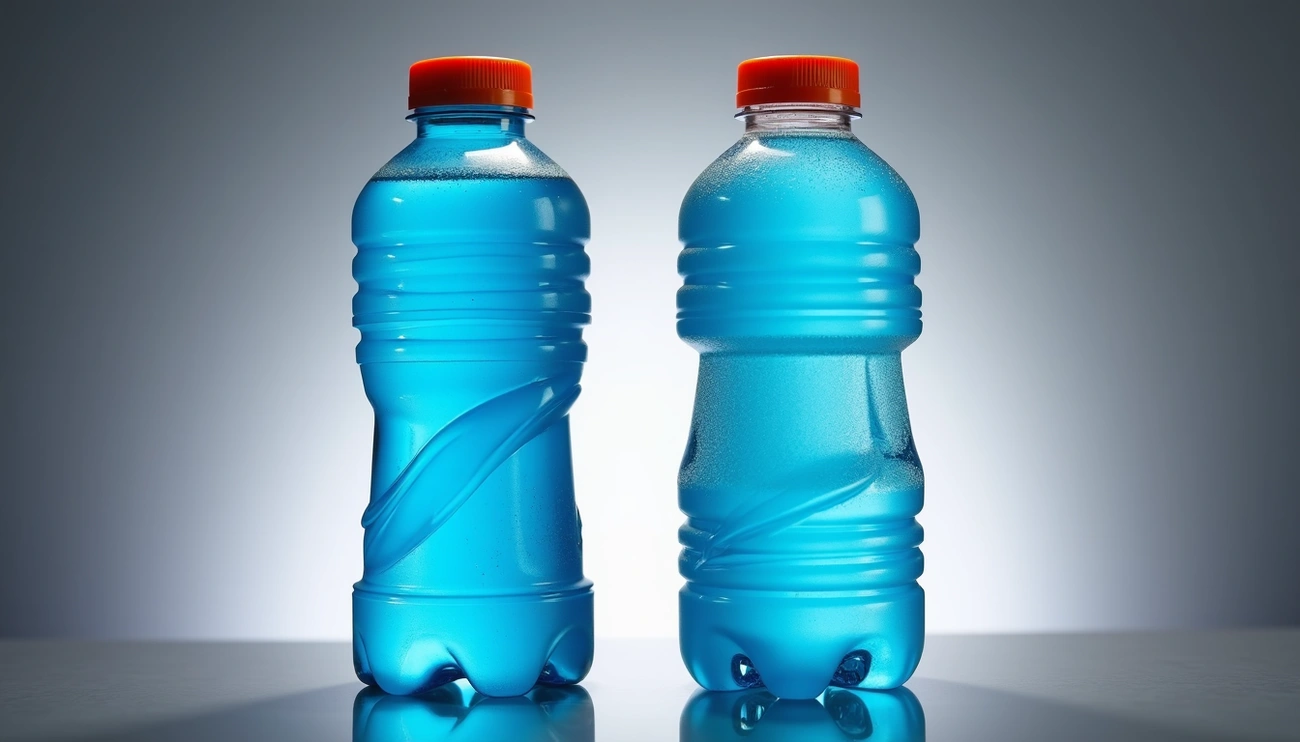
Yes, you can freeze Gatorade bottles safely. Freeze Gatorade by leaving about 1–2 inches (2.5–5 cm) of space in the bottle to allow for liquid expansion. Frozen Gatorade stays usable for up to 6 months and works well as a cold pack or slow-melting drink.
What is Gatorade made of and why it matters
Understanding the composition of Gatorade is crucial for explaining why freezing these popular sports drinks can be tricky. The ingredients not only determine how it hydrates your body but also dramatically affect its freezing behavior.
Key ingredients in Gatorade
Gatorade is primarily a mixture of water, sugars, and electrolytes. The main ingredients include water as the base, sucrose (table sugar) and dextrose as carbohydrate sources, sodium and potassium as electrolytes, plus citric acid, salt, and various flavorings and colorings. A standard 8-ounce serving contains about 14 grams of sugar, 110 mg of sodium, and 30 mg of potassium.
These ingredients aren’t random – each serves a specific purpose. The electrolytes replace what your body loses through sweat, while carbohydrates provide energy for physical activity. As the manufacturer explains, “When you sweat, you lose electrolytes, like sodium and potassium, which help the brain communicate with muscles and regulate fluid balance in your body”.
How electrolytes and sugar affect freezing
The presence of dissolved substances fundamentally changes how Gatorade freezes compared to plain water. Since Gatorade is essentially “sugared salt water”, these dissolved particles interfere with water molecules’ ability to form ice crystals.
This phenomenon, known as freezing point depression, means Gatorade freezes at a lower temperature than pure water. Furthermore, as the temperature drops, some water freezes first, causing the remaining liquid to become more concentrated with salt and sugar, requiring even lower temperatures to solidify completely.
Why composition changes freezing behavior
The sugar and salt content in Gatorade creates several notable effects on freezing. First, Gatorade typically freezes around 18 degrees Fahrenheit, significantly below water’s freezing point. Second, rather than freezing uniformly, Gatorade often becomes slushy before solidifying entirely.
This happens because the dissolved sugars and electrolytes raise the viscosity and reduce water molecule mobility, consequently slowing ice crystal formation. Moreover, the artificial colors, stabilizers, and other additives further influence how ice crystals form.
Perhaps most importantly, these compositional factors explain why Gatorade expands differently during freezing than water does, which directly impacts the safety of freezing Gatorade in its original bottles.
Can you freeze Gatorade bottles?
So, you’re curious about putting those Gatorade bottles in the freezer. Despite what seems like a simple question, the answer requires looking at several important factors.
Gatorade’s freezing point vs. water
The science is straightforward: Gatorade freezes at a lower temperature than plain water. This happens due to the “freezing point depression” effect caused by its dissolved sugars and electrolytes. While water typically freezes at 32°F (0°C), Gatorade requires colder temperatures—typically around 18°F.
This difference explains why your Gatorade might still be liquid in situations where water would have already frozen solid. As the temperature drops, water within the Gatorade begins to freeze first, leaving the remaining liquid increasingly concentrated with salts and sugars, which then requires even lower temperatures to solidify.
How long it takes to freeze
Freezing time for Gatorade depends on several variables, including bottle size and your freezer’s temperature. In a standard home freezer (approximately 0°F/-18°C), a twenty-ounce bottle of Gatorade typically takes three to four hours to freeze completely.
The freezing process happens gradually:
- After 15-30 minutes, you’ll notice freezing beginning around the edges
- At about 1 hour, the Gatorade develops a slushy consistency
- Between 2-4 hours, it reaches an ideal slushy texture that’s still somewhat consumable
- Beyond that, it will eventually freeze solid
What happens to the bottle during freezing
Freezing Gatorade creates physical changes to the container itself. As the liquid expands during freezing, several outcomes are possible:
Most commonly, the plastic bottle will bulge, dome, or warp from the internal pressure. In some cases, the cap may pop off or the side of the bottle might crack, leading to leakage when thawed. Nevertheless, these serious failures are relatively uncommon since the air gap in most bottles allows for some expansion, and plastic bottles can stretch to accommodate the pressure.
Gatorade officially advises against freezing their product, noting that “the content of the bottle may expand under frozen conditions resulting in distortion of the seal integrity of the plastic bottle”. Even though many people do freeze Gatorade without incident, these potential physical changes to the bottle present legitimate concerns.
Is it safe to freeze Gatorade bottles?
After exploring what happens when Gatorade freezes, the primary question remains: is it actually safe to freeze Gatorade bottles? According to the manufacturer, the answer is a clear “no.” Gatorade explicitly states, “We do not recommend freezing Gatorade”.
Risks of bottle expansion and leaks
Freezing creates significant pressure inside the bottle as the liquid expands. This expansion can lead to several issues:
The plastic bottle may become distorted or warped. In some cases, the cap might pop off or the bottle wall could crack, resulting in frozen leakage when thawed. Worst-case scenarios include complete “freeze blasts” where bottles explode in your freezer.
Considering the bottle material itself, repeated freezing of plastic containers raises additional concerns. The stretching and distortion of plastic bottles might potentially leach chemicals into your drink. As one source notes, “It’s basically like chewing on the plastic bottle”.
Impact on flavor and texture
The manufacturer specifically warns that freezing or storing Gatorade below 40°F can damage the flavor emulsion. This damage occurs because the emulsion that keeps flavors together breaks down.
Upon thawing, ingredients may separate, creating an undesirable taste experience. Additionally, the texture often changes – particularly noticeable in partially frozen Gatorade where sugar concentrates unevenly, making the first half of the bottle overly sweet.
Does freezing affect hydration benefits?
Fortunately, amid these concerns, freezing Gatorade doesn’t reduce its functional benefits. According to official Gatorade sources, “Freezing doesn’t affect the efficacy of the product, only its sensory attributes”. Therefore, yet the drink will still replace electrolytes effectively, even if it doesn’t taste as intended.
Better ways to chill Gatorade without freezing
Looking for ways to enjoy ice-cold Gatorade without the risks of freezing the bottle? Here are safer yet equally effective alternatives that keep your favorite sports drink chilled to perfection.
Using ice cubes or slushies
Gatorade slushies offer both cooling refreshment plus all the electrolyte benefits of regular Gatorade. Creating this frosty treat requires only a blender, ice, Gatorade, and a pinch of sugar. For ideal consistency, use a 4:1 ratio of ice to liquid. Adding sugar isn’t merely for sweetness—it prevents ice from forming large clumps and creates the perfect sippable texture.
For best results:
- Ensure your Gatorade is already chilled before blending
- Use a high-speed blender for proper ice crushing
- Serve immediately as these slushies don’t store well
Alternatively, make Gatorade ice cubes by freezing the drink in ice trays. These can cool down your beverage without diluting its flavor.
The wet paper towel freezer trick
Interestingly, there are conflicting findings about this popular hack. Some sources claim wrapping a wet paper towel around a Gatorade bottle and placing it in the freezer for 10-15 minutes rapidly chills it. The manufacturer even recommends this method—20 minutes in the freezer with wet paper wrapping yields a frosty beverage.
Conversely, scientific testing suggests the wet towel may actually slow cooling by acting as insulation. At most, the effect appears minimal.
Refrigeration vs. freezing
Given Gatorade’s official stance against freezing their products, refrigeration remains the safest option. Storing Gatorade above 40°F preserves flavor integrity. Whenever possible, plan ahead by refrigerating bottles overnight.
For rapid cooling without freezing, place bottles in an ice bath. Adding salt to ice water creates temperatures below freezing without solidifying your drink. This method cools beverages faster than simply using a freezer.
Conclusion
Freezing Gatorade bottles certainly seems like a convenient way to enjoy an icy-cold refreshment after a workout. However, as we’ve seen throughout this article, this practice comes with several noteworthy risks. Though Gatorade does freeze eventually, the process takes longer than water due to its sugar and electrolyte content. Additionally, the manufacturer explicitly advises against freezing their product.
Safety concerns remain the primary reason to avoid freezing Gatorade bottles. The expanding liquid can distort bottles, pop caps, or even cause leaks when thawed. Beyond physical damage, freezing can also break down the flavor emulsion, leaving you with a drink that tastes different from what you expect.
Thankfully, better alternatives exist for enjoying cold Gatorade. Making Gatorade slushies, creating Gatorade ice cubes, or simply refrigerating bottles overnight provide safer options. The wet paper towel trick might work for some, though evidence suggests its effectiveness is minimal.
