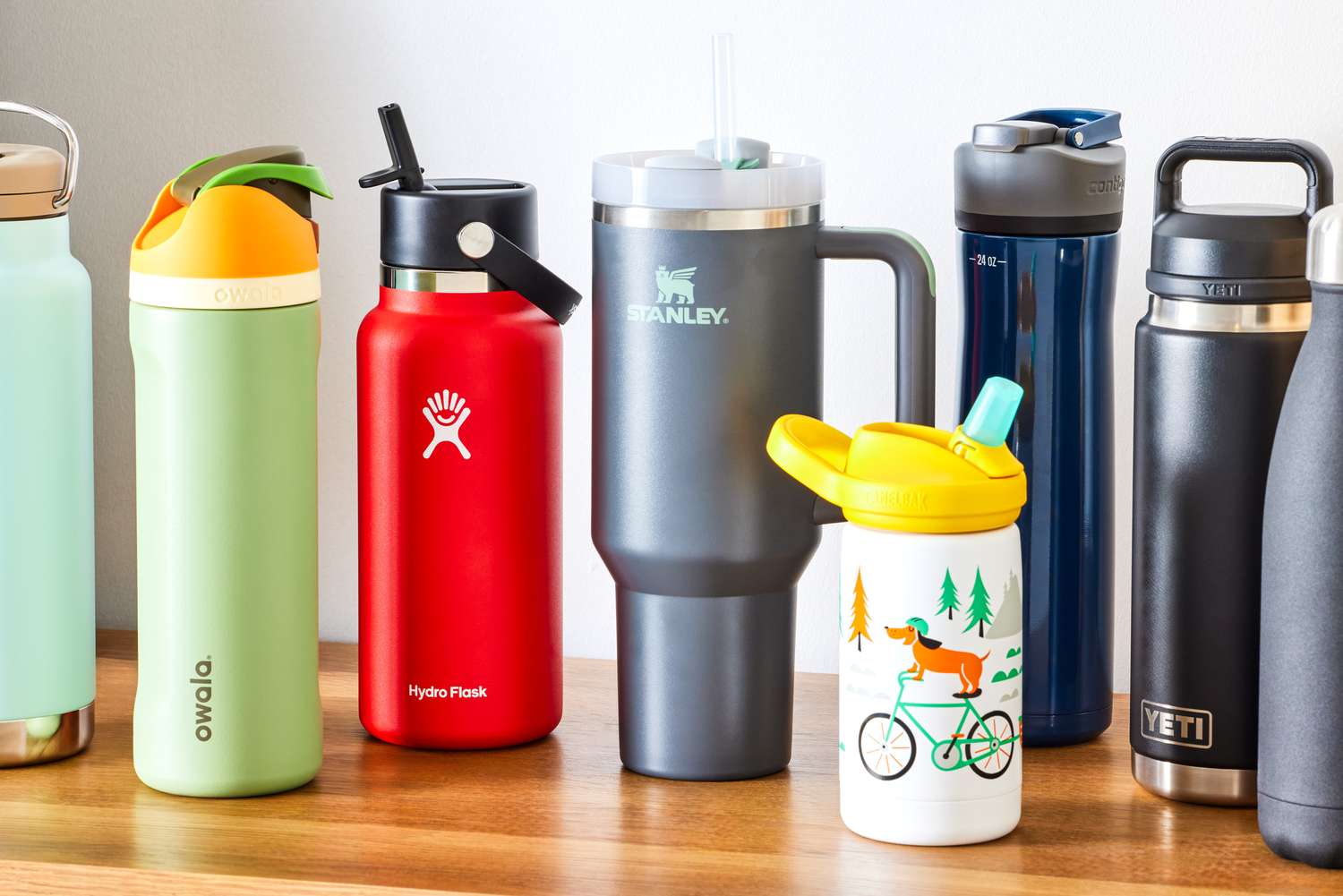
We’ve tested more than 40 insulated bottles since 2021 to bring you this guide to the best vacuum sealed water bottles.
Most bottles can keep hot liquids hot for around 12 hours and cold liquids cold for about 24. The best insulated water bottles use vacuum insulation technology for the purpose of maintaining these temperatures. Furthermore, top-performing stainless steel water bottles deliver durability, leak-proof designs, and clean taste. Whether you need a vacuum insulated water bottle for outdoor adventures or daily commutes, we’ve curated 10 expert picks with detailed buying guidance to help you choose the best insulated water bottle for your needs.
| Product Name | Price |
|---|---|
| Hydro Flask Wide Mouth | Check Price |
| YETI Rambler | Check Price |
| Stanley Quencher H2.0 | Check Price |
| Owala FreeSip | Check Price |
| Takeya Actives | Check Price |
| Klean Kanteen TKWide | Check Price |
| Bivo Trio | Check Price |
| CamelBak Eddy+ | Check Price |
| Purist Mover | Check Price |
| LifeStraw Go | Check Price |
Hydro Flask Wide Mouth – Best Overall Insulated Water Bottle
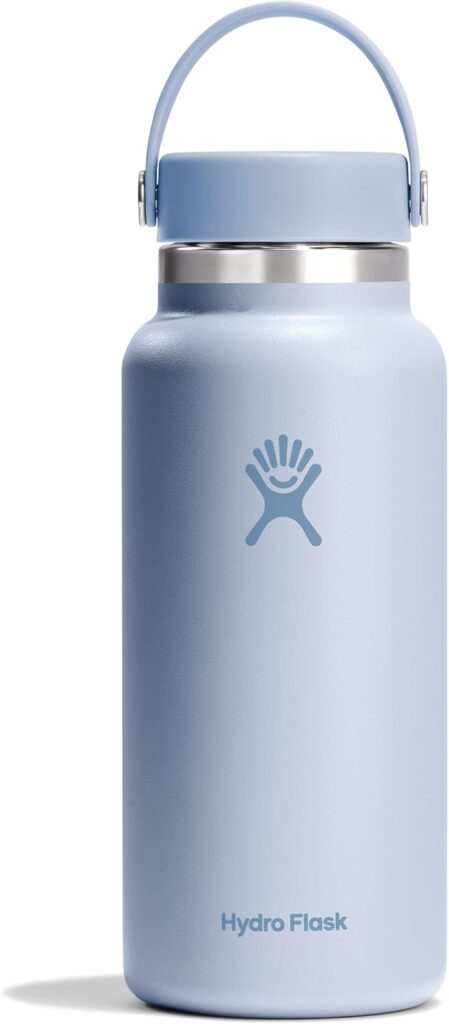
The Hydro Flask Wide Mouth earned its spot as our top pick after rigorous testing against dozens of competitors. This stainless steel water bottle delivers exceptional temperature control paired with a design that handles daily wear without compromise.
Key Features
The bottle uses TempShield double-wall vacuum insulation to maintain beverage temperatures for 24 hours cold and 12 hours hot. Built from 18/8 Pro-Grade stainless steel, the construction balances durability with weight. The 32oz model weighs just 15.2oz empty, making it noticeably lighter than comparable options. For instance, a 26oz Yeti Rambler weighs 18.3oz despite holding less volume.
The wide mouth opening accommodates ice cubes and simplifies cleaning. Hydro Flask offers multiple lid options including the Straw Lid, Chug Cap, and Flex Cap, letting you match the drinking style to your activity. The Color Last Powder Coat provides grip without feeling sticky, and the entire bottle is dishwasher safe despite the coating.
Size options span from 20oz to 64oz. For backpackers seeking lighter gear, the Trail Series reduces weight by 25% while maintaining the same insulation performance. The bottles are BPA and Phthalate free and come with a lifetime warranty against manufacturing defects.
Our team member has used her Hydro Flask for over 6 years through drops, international travel, and extreme temperatures without failure.
Pros and Cons
Pros:
- Leakproof seal when closed properly
- No flavor transfer between beverages
- Multiple lid configurations available
- Wide mouth fits ice and supplements
- Lighter than similar capacity bottles
Cons:
- Flex Cap squeaks when twisted and can thread incorrectly if not aligned precisely
- Wide mouth design doesn’t fit standard cup holders
- Higher price point compared to non-insulated options
Best For
This vacuum insulated water bottle suits anyone who needs reliable temperature control throughout the day. The wide mouth makes it ideal for adding ice on summer hikes or mixing protein powder post-workout. Office workers benefit from the leakproof design and ability to keep coffee hot through morning meetings. The varied lid options mean you can switch between sipping mode for hot tea and chug mode for cold water during workouts. While the width may challenge some cup holders, the exceptional insulation and proven durability make this our best insulated water bottle recommendation.
YETI Rambler – Most Durable Vacuum Insulated Water Bottle
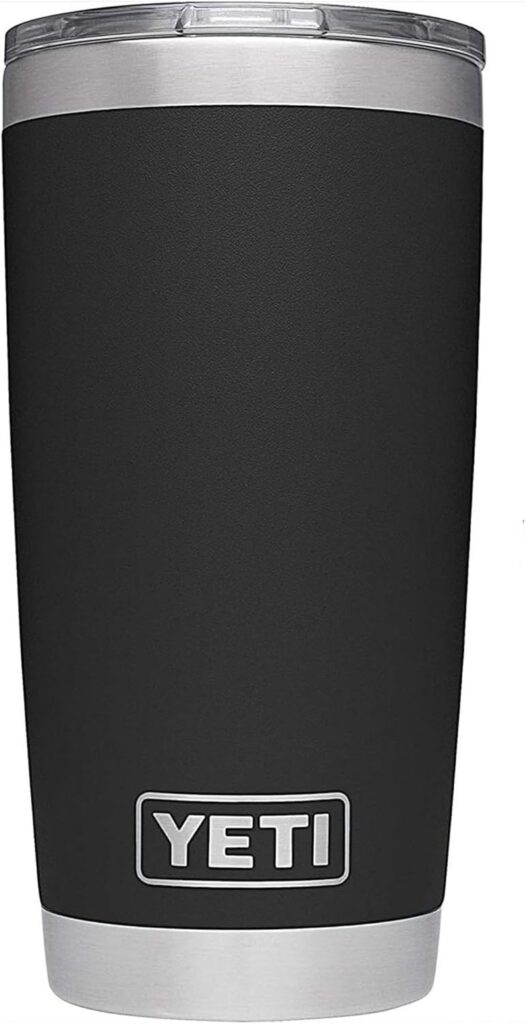
YETI built its reputation on gear that survives extreme conditions, and the Rambler proves this philosophy applies to their stainless steel water bottles. After putting this vacuum insulated water bottle through multiple drop tests onto hard and jagged surfaces, it sustained only minor paint scuffs while lesser bottles dented or cracked.
What Makes It Stand Out
The Rambler uses kitchen-grade 18/8 stainless steel that resists punctures and rust. This construction makes it the most durable stainless steel bottle tested, outperforming competitors in impact resistance. During Utah desert testing, the bottle endured numerous falls without structural damage beyond cosmetic paint chips. One reviewer dropped their Rambler down a flight of stairs twice over four years, and the bottle still functions perfectly with only slight paint chippage.
The TripleHaul handle sets this bottle apart. The handle width accommodates three fingers comfortably, making it easier to carry than narrow-handle competitors. A quick half-twist removes the handle to expose the chug spout for controlled drinking on the go.
YETI offers four interchangeable cap options for the Rambler: the MagSlider lid with magnetic closure, the Chug Cap for fast-flow drinking, the Straw Cap, and the Hotshot Cap designed for hot liquids. This versatility lets you match the lid to your activity. The Chug Cap includes a protective cover that seals firmly to eliminate leaks and features a built-in carry handle.
Double-wall vacuum insulation kept ice frozen nearly all day during miles-long hikes in sunny Utah desert conditions. The bottle maintains hot liquid temperatures exceptionally well, often requiring the lid to be unscrewed to release steam. The No Sweat exterior stays room temperature regardless of beverage temperature inside, preventing burned or frozen hands.
Available sizes span 18oz, 26oz, 36oz, 46oz, and 64oz. The 26oz model weighs 1.40 lbs empty, making it noticeably heavier than comparable bottles. The bottle is 100% leakproof when properly closed and dishwasher safe. YETI backs the Rambler with a five-year warranty.
Pros and Cons
Pros:
- Survives drops and impacts better than any tested competitor
- Four interchangeable cap styles for different drinking preferences
- Wide handle fits three fingers for comfortable carrying
- Maintains ice for full-day desert hikes
- Kitchen-grade stainless steel resists punctures and rust
Cons:
- Weighs 40% more than similar capacity bottles from other brands
- Price point reaches $50 for standard sizes
- Most sizes don’t fit standard cup holders
- Straw lid shouldn’t be used with hot beverages
Who Should Buy This
This best insulated water bottle suits anyone prioritizing longevity over weight. The Rambler makes sense for basecamp use, car camping, or daily commutes where durability matters more than portability. The substantial construction handles the abuse of construction sites, outdoor work, or frequent drops. However, backpackers and distance hikers may find the weight impractical for long treks. According to testing, if you need a vacuum insulated water bottle that will last years without replacement, the investment pays off despite the higher upfront cost.
Stanley Quencher H2.0 – Best for All-Day Hydration
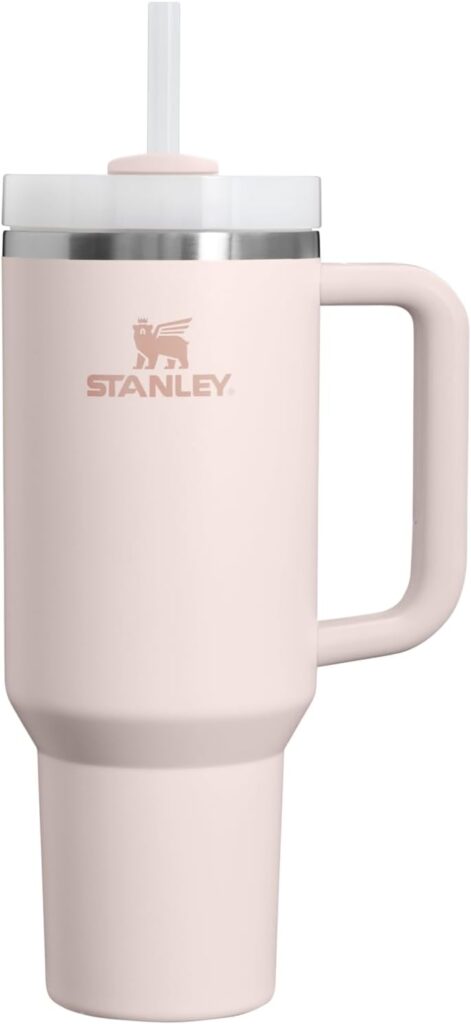
A 40oz capacity changes how you approach hydration. The Stanley Quencher H2.0 holds enough liquid to meet recommended daily water intake with a single fill, eliminating constant trips to the water cooler or kitchen sink. This vacuum insulated water bottle became a cultural phenomenon for reasons beyond social media hype.
Key Features
The FlowState lid system separates this stainless steel water bottle from competitors. A rotating dial on top switches between three positions: a straw opening with splash resistance, a drink spout, and a full-cover seal. The mechanism clicks firmly into place with satisfying tactile feedback. Besides the versatility, the reusable straw stays secured in the lid opening.
What solves the cup holder problem other large bottles create is the tapered base design. The 3.1-inch diameter base fits standard car and truck cupholders, making this the rare high-capacity option that works in vehicles. The comfort-grip handle features silicone inserts for easier carrying when the bottle reaches its full 1.18 lb weight.
The construction uses 90% recycled 18/8 stainless steel, marked by a recycled stainless steel icon inside the tumbler. Double-wall vacuum insulation keeps beverages cold for 11 hours and maintains ice for 48 hours. Testing confirmed ice cubes remained intact even after overnight storage, with water staying cold for 8-10 hours post-fill.
Specifically regarding cleaning, the bottle is dishwasher safe. However, the lid disassembles into multiple parts including a rotating nozzle with silicone inlay that requires removal for thorough cleaning. Skipping this step risks bacteria buildup.
The 40oz model retails for $45, with 30oz and 64oz sizes available. The 64oz version maintains cold temperatures for 15 hours and ice for 60 hours.
Pros and Cons
Pros:
- Tapered base fits most car cupholders despite large capacity
- Three-position lid adapts to different drinking preferences
- Encourages increased water consumption through convenience
- Ice retention exceeds 24 hours in normal conditions
- Made from recycled materials with BPA-free construction
Cons:
- Not leakproof when tipped over; water spills from straw opening
- Lid contains multiple parts requiring complete disassembly for cleaning
- Heavy when filled to capacity
- Price point reaches $45 for standard 40oz size
Best For
This best insulated water bottle suits anyone struggling to meet hydration goals. The sheer capacity means office workers can fill once in the morning and sip throughout meetings without refills. Equally, the cup holder compatibility makes it practical for commuters and road trips. In this situation where you’re at a desk, in a car, or attending classes, the convenience outweighs the bulk. However, balanced against the lack of leak protection, avoid packing this in bags or backpacks where tipping occurs frequently. The Stanley Quencher works best as a stationary hydration companion rather than a throw-in-your-bag option.
Owala FreeSip – Best Straw and Chug Combo
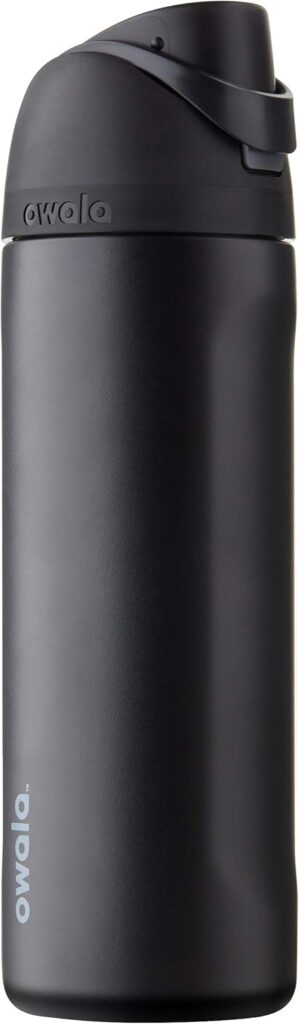
Choosing between sipping and chugging shouldn’t require owning two separate bottles. The Owala FreeSip solves this dilemma with a patented spout that delivers both drinking methods in a single stainless steel water bottle. After earning a spot on Time Magazine’s list of 200 best inventions for 2023, this vacuum insulated water bottle accumulated over 30,000 five-star reviews.
What Makes It Stand Out
The FreeSip spout splits into two distinct openings. One side features a built-in straw that extends deep into the bottle, allowing controlled sipping without tilting. The opposite side offers a wide-mouth opening shaped to conform to your mouth, enabling fast-flow chugging. This eliminates the lid-swapping other bottles require when switching between drinking styles.
What makes the straw side surprisingly effective is the chug opening’s function as a massive vent. Traditional straw bottles use small vent holes that create vacuum resistance, forcing you to suck harder. The FreeSip’s wide chug opening allows air to flow freely, making straw sips effortless. Testing revealed users could drink as quickly through the straw as they could by chugging, without spillage risks.
The push-button mechanism opens with a single thumb press. No twisting, unscrewing, or precise threading required. The carrying handle doubles as a locking mechanism. When folded over the button, it prevents accidental opening in bags. During leak tests, the bottle held its seal when knocked over, shaken, and slid around.
Triple-layer vacuum insulation maintains cold temperatures for 24 hours. Testing showed water temperature increased only 13° after a full day, outperforming bottles that warmed by 20° in the same timeframe. The insulation uses lead-free solder, distinguishing it from competitors that rely on lead-based sealing methods.
The ergonomic spout design mirrors your mouth’s natural shape. Users describe it as “like a pillow for your bottom lip”, requiring minimal lip pursing compared to rectangular straw spouts. The slim profile fits standard cup holders despite triple-layer insulation, and the flat sides provide secure grip.
Cleaning requires less effort than pivot-style straw lids. The fixed straw design eliminates rotating pivot points where bacteria accumulates. The silicone seal removes completely, allowing thorough sanitation. The lid is dishwasher safe while the cup requires hand washing.
Sizes span 24oz, 32oz, and 40oz. The 32oz model retails for $34, positioning it below comparable YETI and Hydro Flask offerings. Available in both Tritan plastic and insulated stainless steel versions, the bottle is BPA-free, lead-free, and phthalate-free.
Drop testing revealed limitations. After three falls from three feet, the bottle dented slightly and leaked. However, it didn’t shatter like some tested alternatives.
Pros and Cons
Pros:
- Dual drinking methods without changing lids
- One-handed push-button operation
- Locking handle prevents accidental spills in bags
- Straw requires minimal suction effort
- Easier to clean than rotating straw mechanisms
- Priced below premium competitors
Cons:
- Dented and leaked after multiple drops from three feet
- Straw requires slight bottle tilt for optimal flow
- Handle feels hard and uncomfortable during extended carrying
- Lid requires substantial closing force
Best For
This best insulated water bottle suits anyone who alternates between sipping and chugging throughout the day. Office workers benefit from discreet straw sipping during meetings, then switching to chug mode for quick hydration between tasks. Drivers appreciate the one-handed operation, making it safer than bottles requiring two hands to open. The covered spout protects against germs during travel, particularly on planes or public transport. Parents use the chug opening to pour water into children’s bottles without unscrewing the entire lid. The affordable price makes it accessible for buying multiple bottles for family members.
Takeya Actives – Best Budget Stainless Steel Water Bottle
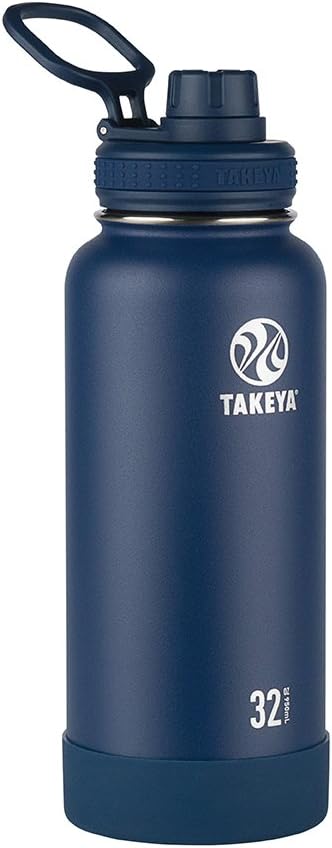
Affordability doesn’t require sacrificing quality. The Takeya Actives delivers double-wall vacuum insulation at $35, roughly half the price of premium alternatives with comparable temperature control. This stainless steel water bottle positions itself as the value leader among insulated options.
Key Features
The bottle uses 18/8 food grade stainless steel construction with BPA-free plastic components. Double-wall insulation maintains cold temperatures for 24 hours while preventing exterior condensation. During desert testing, cold liquids stayed chilled throughout full days in direct sun, with ice remaining frozen into the afternoon. Hot beverages maintained warmth for several hours, though performance diminished faster than cold retention.
The Insulated Spout Lid screws closed to form a leak-proof seal. This design allows safe transport in bags and backpacks without spillage concerns. The carrying loop provides hand portability, and the slender profile fits most car cup holders. A removable protective bumper shields the bottom from dings and scratches, protecting the bottle during drops and daily wear.
Size options span 18oz, 22oz, 24oz, 32oz, and 64oz, offering more capacity choices than most competitors. The smaller 24oz model weighs 0.8lb empty, though testing revealed it as one of the heavier bottles at 15.5 ounces. The entire bottle is dishwasher safe, simplifying maintenance compared to hand-wash-only alternatives.
Takeya backs the Actives with a lifetime warranty covering manufacturing defects. Customer reports document bottles lasting 10+ years with daily use, enduring significant denting and scratching while maintaining insulation performance.
Pros and Cons
Pros:
- Priced 50% below premium insulated bottles
- Leak-proof spout lid prevents bag spills
- Protective bumper reduces dent damage
- Fits standard cup holders despite insulation
- Lifetime warranty coverage
- Wide size range from 18oz to 64oz
Cons:
- Carrying handle hinge shows wear after weeks of use
- Weighs more than comparable capacity bottles
- Lid contains multiple parts requiring thorough cleaning
- Heavier construction limits backpacking suitability
Who Should Buy This
This best insulated water bottle suits budget-conscious buyers seeking reliable temperature control without premium pricing. Office workers benefit from the leak-proof design and cup holder compatibility during commutes. Gym users appreciate the dishwasher-safe construction for quick cleaning between workouts. The variety of sizes lets families purchase matching bottles at affordable total cost. However, the weight makes it less suitable for long-distance hiking. Particularly for daily urban use, car travel, and stationary activities, the Takeya Actives provides exceptional value as a vacuum insulated water bottle.
Klean Kanteen TKWide – Best for Minimizing Plastic Contact
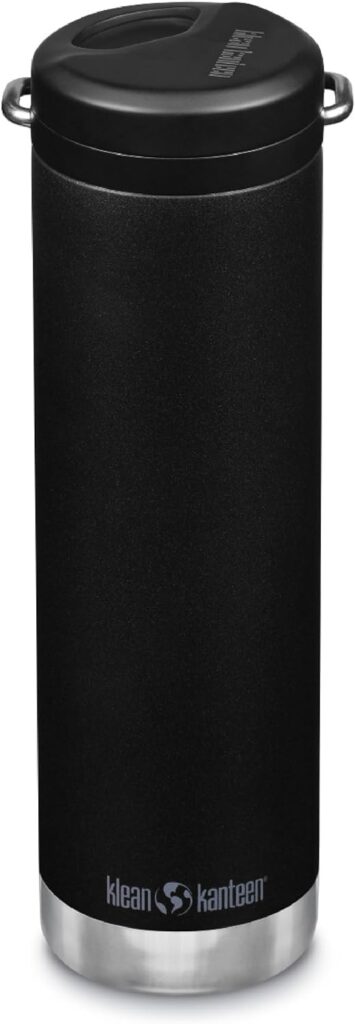
Concern about microplastics and chemical leaching drives many buyers toward bottles that minimize plastic contact with drinking water. Klean Kanteen pioneered stainless steel reusable bottles before vacuum insulation became standard, and the TKWide continues this material-first philosophy as one of the best vacuum sealed water bottles for health-conscious users.
What Makes It Stand Out
The TK Closure internal thread design eliminates exposed threading where you drink. Traditional bottles position threads externally, forcing your lips against plastic grooves with each sip. Klean Kanteen moved the threading inside the bottle body, creating a smooth, rounded stainless steel lip. This design also increases thermal performance by improving the vacuum seal.
Particularly noteworthy is the TKWide Insulated Wide Loop Cap option. This cap features vacuum insulated stainless steel construction with double silicone gasket seals, creating a completely stainless steel interior where your beverage never touches plastic. Customer feedback highlights this as a key differentiator for those avoiding plastic contact entirely.
The bottle uses silica-based solder rather than lead-based methods common in competitor bottles. While lead solder rarely poses actual danger unless bottles sustain extreme damage, the lead-free approach provides additional peace of mind.
Construction relies on 90% post-consumer recycled 18/8 stainless steel, making this an environmentally responsible choice. Climate Lock vacuum insulation maintains ice for up to 75 hours in the 32oz model, exceeding the 24-48 hour performance of previously covered options. The 2.6-inch wide mouth accommodates ice cubes and simplifies cleaning.
Multiple interchangeable caps suit different activities. The Chug Cap, Twist Cap with steel straw, Loop Cap, and Cafe Cap all fit TKWide bottles. However, some caps include plastic components on undersides that contact liquid. For completely plastic-free drinking, the Loop Cap remains the optimal choice.
Sizes span 12oz through 64oz. The 32oz model weighs 18.7 ounces and retails for $44.95. All bottles carry a lifetime warranty and won’t retain flavors between beverages.
Pros and Cons
Pros:
- Internal threading eliminates plastic contact at drinking surface
- Loop Cap option provides all-stainless steel interior
- Lead-free silica-based solder construction
- 90% recycled steel reduces environmental impact
- Ice retention exceeds 48 hours consistently
Cons:
- Some cap options still have plastic on undersides
- Heavier than comparable insulated bottles
- Limited color selection compared to competitors
- Higher price point for base bottle
Best For
This best insulated water bottle suits anyone prioritizing material safety over weight or esthetics. The internal threading benefits office workers who sip throughout the day without lips contacting plastic threads. Parents selecting bottles for children appreciate the lead-free construction and non-toxic materials. Environmental advocates value the recycled steel content and the brand’s sustainability commitment. The all-steel Loop Cap configuration makes this ideal for those concerned about microplastics in drinking water. Otherwise, buyers seeking lightweight options for backpacking may find the weight impractical for long-distance treks.
Bivo Trio – Best Lightweight Vacuum Insulated Bottle
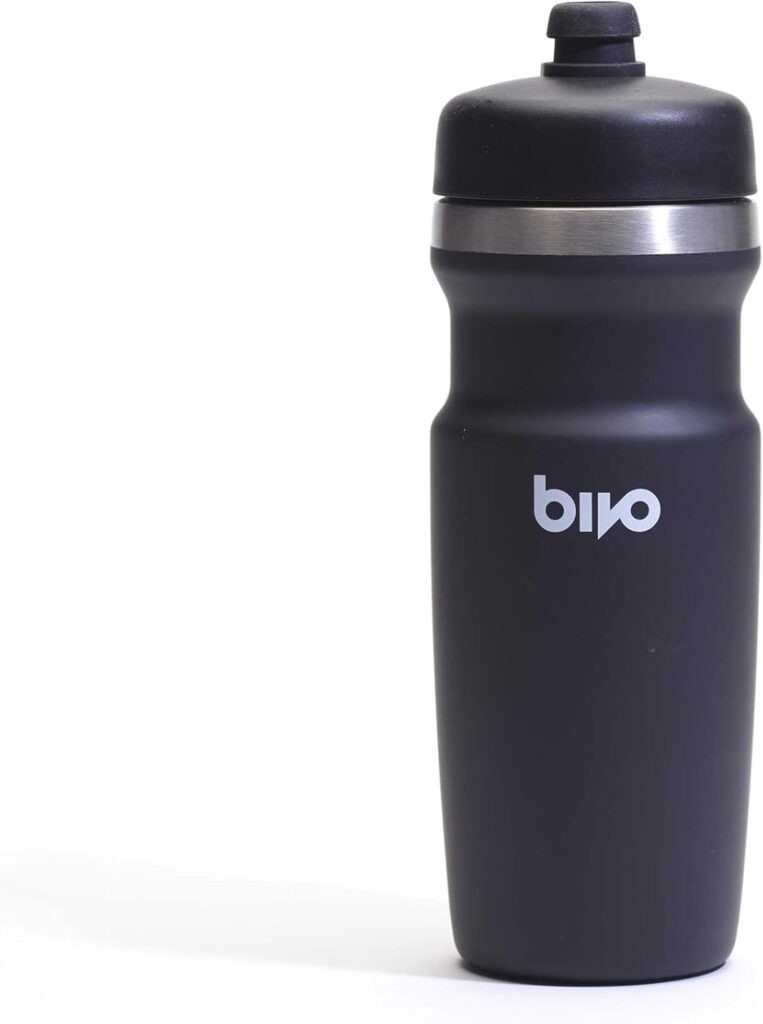
Cyclists face a specific challenge with insulated bottles: traditional double-wall designs add substantial weight. The Bivo Trio addresses this engineering problem with vacuum insulation technology that weighs 270g, making it 25% lighter than conventional insulated metal bottles. This stainless steel water bottle emerged from collaboration with an ex-NASA engineer focused on solving cycling-specific hydration demands.
Key Features
The gravity flow nozzle delivers effortless drinking without squeezing. Testing showed you can empty the 21oz bottle faster than squeezing most plastic bottles of equal capacity. The globally patented high-flow sport nozzle uses food-grade silicone components meeting LFGB compliance standards, with BPA, BPS, BPF, and phthalate-free construction throughout.
Specifically designed for universal bike cage compatibility, the bottle stays secure over rough terrain while remaining easy to extract. The silicone anti-slip exterior coating reduces rattling in metal cages. Double-wall vacuum insulation maintains cold temperatures for 12+ hours. During controlled testing in temperatures exceeding 100°F, the Bivo Trio gained only 13.9 degrees after three hours. One field test documented ice cubes remaining unmelted after 90 minutes in 38°C heat.
The bottle uses 100% lead-free construction with recyclable stainless steel. Everything disassembles for thorough cleaning and fits in conventional dishwashers. Replacement tops are available separately. The 621ml capacity stands 10.23 inches tall, and the company offsets manufacturing impact to achieve carbon neutrality. The bottle retails for $49.00.
Pros and Cons
Pros:
- Weighs 25% less than traditional insulated bottles
- No squeezing required for high flow rate
- Lead-free construction unlike most vacuum bottles
- Completely disassembles for cleaning
- Universal bike cage compatibility
Cons:
- Stainless body dents if dropped
- Silicone exterior scuffs quickly in metal cages
- Heavier than plastic bottles at 270g
- Cold drinks only; materials can’t handle hot liquids
Best For
This best insulated water bottle suits cyclists prioritizing cold beverage retention without excessive weight penalties. The gravity flow system benefits riders needing quick hydration during hard efforts without fumbling with squeeze bottles. Road cyclists, gravel riders, and mountain bikers appreciate the cage-specific design. Nonetheless, the denting vulnerability makes it less suitable for extreme off-road abuse. Backpackers seeking lightweight insulation for non-cycling activities also benefit from the weight advantage.
CamelBak Eddy+ – Best for Easy Sipping
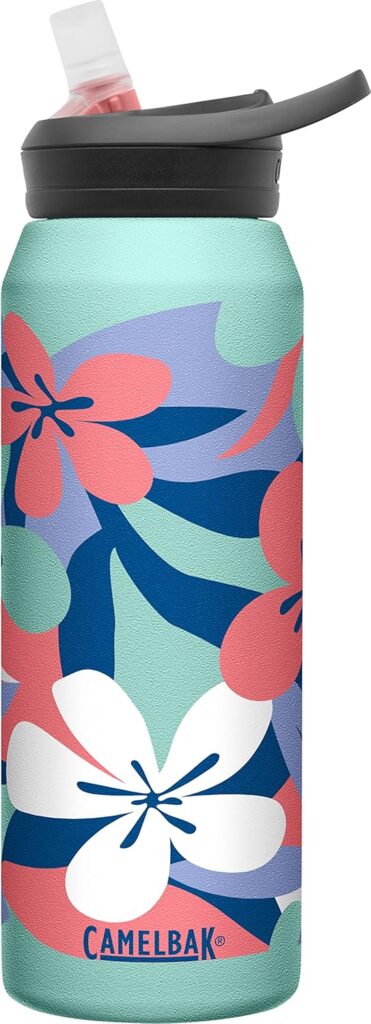
Drinking from a water bottle while driving, working, or hiking creates a familiar problem: you tilt the bottle back, lose sight of your surroundings, and risk spilling. The CamelBak Eddy+ eliminates this issue with an internal straw system that delivers hydration without requiring you to tip the bottle. This stainless steel water bottle combines practical design with insulation performance for everyday carry.
What Makes It Stand Out
The redesigned bite valve delivers 25% more flow per sip compared to the original Eddy model. This improvement addresses the main complaint users had with earlier versions: slow flow rates that required excessive suction. The bite valve self-seals after each sip, creating a spill-proof system when open and leak-proof protection when closed.
Double-wall vacuum insulation keeps beverages cold for 28 hours. The sweat-proof exterior prevents condensation regardless of internal temperature. Available in 25oz insulated stainless steel and 20oz versions, the bottle remains lightweight and portable enough for daily transport. The slim profile fits standard cupholders, and the entire bottle is dishwasher safe.
The carry handle provides secure transport and clips to backpacks. However, the straw and lid attract dirt and require frequent thorough cleaning to prevent mold buildup. Customer feedback indicates newer models show reduced durability compared to earlier versions, with bite valves cracking more easily.
Pros and Cons
Pros:
- No tipping required for drinking
- 25% faster flow than previous design
- Leak-proof seal when closed
- Dishwasher safe throughout
- Fits standard cupholders
Cons:
- Straw and lid difficult to clean thoroughly
- Bite valve durability decreased in recent models
- Requires frequent cleaning to prevent mold
Who Should Buy This
This vacuum insulated water bottle suits anyone needing safe hydration while multitasking. Drivers benefit from keeping eyes on the road during sips. Office workers appreciate discreet drinking during video calls without camera-blocking bottle tilts. Parents value the reliable leak protection for packing in children’s bags. The bite valve design makes this best insulated water bottle ideal for activities requiring attention elsewhere.
Purist Mover – Best for Preventing Flavor Transfer

Coffee drinkers who reuse their bottles for water know the problem: yesterday’s brew lingers in this morning’s hydration. The Purist Mover addresses this with a silicon dioxide coating that prevents flavor transfer between beverages as effectively as glass bottles without the fragility.
Key Features
Purist technology applies a 60-nanometer layer of silicon dioxide to the bottle interior. This creates a glass-like barrier between liquid and the 316 surgical-grade stainless steel body. The coating stops contaminants from entering beverages and prevents metallic taste. Testing showed you can transition from coffee to water to cocktails in the same bottle without residual flavors, provided you rinse between uses.
The 18oz model fits car cupholders and backpack pockets. Double-wall vacuum insulation maintains temperatures for 12 hours hot and 24 hours cold. All Purist lids interchange across bottle sizes, offering versatility between the 10oz, 18oz, and 32oz options.
Care requires hand washing with warm water and mild detergent. The bottle cannot handle liquids exceeding 185°F, limiting use with boiling water. Some testers noticed the Element lid preserved taste purity better than other cap styles.
Pros and Cons
Pros:
- Zero flavor transfer between different beverages
- No metallic taste from stainless steel contact
- Interchangeable lids fit all Purist sizes
- Combines glass taste purity with metal durability
Cons:
- Not dishwasher safe
- Cannot use with liquids above 185°F
- Lid may produce whistling noise during drinking
Best For
This vacuum insulated water bottle suits anyone switching between coffee, tea, and water throughout the day. The taste purity benefits office workers who alternate beverages without washing between fills. Sensitive palates appreciate the glass-like interior that eliminates metallic notes common in standard stainless steel water bottles.
LifeStraw Go – Best with Built-In Water Filter
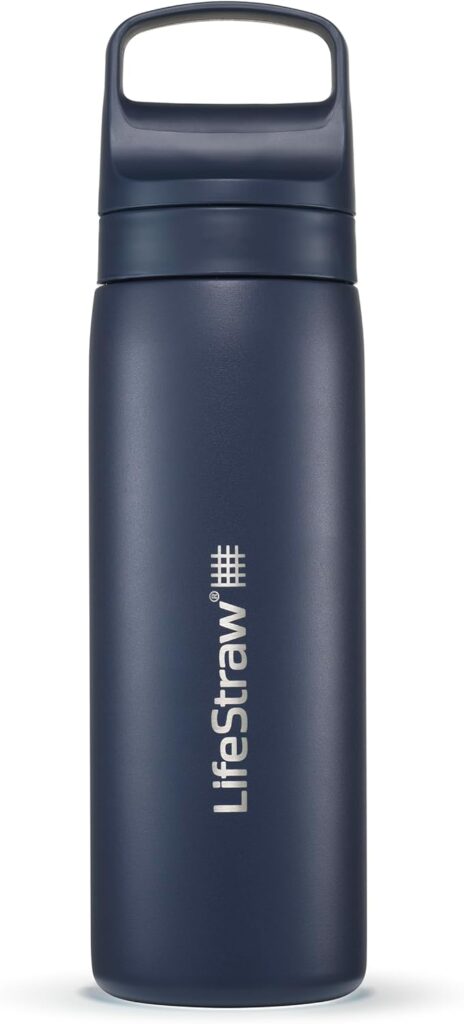
Access to clean water sources determines where you can travel and hike. The LifeStraw Go shifts focus from temperature control to water safety, making questionable water sources drinkable through built-in filtration rather than insulation technology.
What Makes It Stand Out
The two-stage filtration system removes contaminants without pumping. The hollow fiber membrane eliminates 99.9999% of bacteria including E. coli and Salmonella, plus 99.999% of parasites like Giardia and Cryptosporidium. The 0.2-micron filter also traps 99.999% of microplastics, sand, and dirt[421]. The activated carbon capsule reduces chlorine, pesticides, and organic chemicals that cause bad taste[421].
The membrane filter lasts 1,000 gallons (4,000L), equivalent to five years of daily use. When exhausted, it stops allowing water flow entirely. The carbon filter handles 26 gallons (100L) before requiring replacement[421].
Weighing just 5.9 ounces including filters, the 22oz capacity bottle fits backpack mesh pockets. The flip-up mouthpiece folds into the cap for protection, and you simply sip through the straw after filling from streams. The bottle retails for $44.95.
Pros and Cons
Pros:
- Drink directly from streams without pumping
- Replaceable filters prevent landfill waste
- Meets EPA drinking water standards
- Lightweight at 5.9oz with filters
Cons:
- Thin plastic construction feels delicate
- Not insulated for temperature control
- Can’t use with electrolyte mixes when filter installed
Best For
This bottle suits backpackers and international travelers needing water purification over temperature maintenance. The filtration capability makes it ideal for areas with agricultural runoff or biological contamination.
Conclusion
After testing more than 40 vacuum sealed water bottles, I’ve learned that the “best” choice depends entirely on your specific needs. Office workers benefit from the Stanley Quencher’s massive capacity, while cyclists need the Bivo Trio’s lightweight design. Budget constraints make the Takeya Actives sensible, whereas durability demands point toward the YETI Rambler.
Equally important, consider how you’ll actually use your bottle. Backpackers prioritize weight over durability. Commuters need cup holder compatibility. International travelers require filtration over insulation.
Take time to match the bottle features to your daily routine. The right vacuum insulated water bottle transforms hydration from a chore into an effortless habit.
