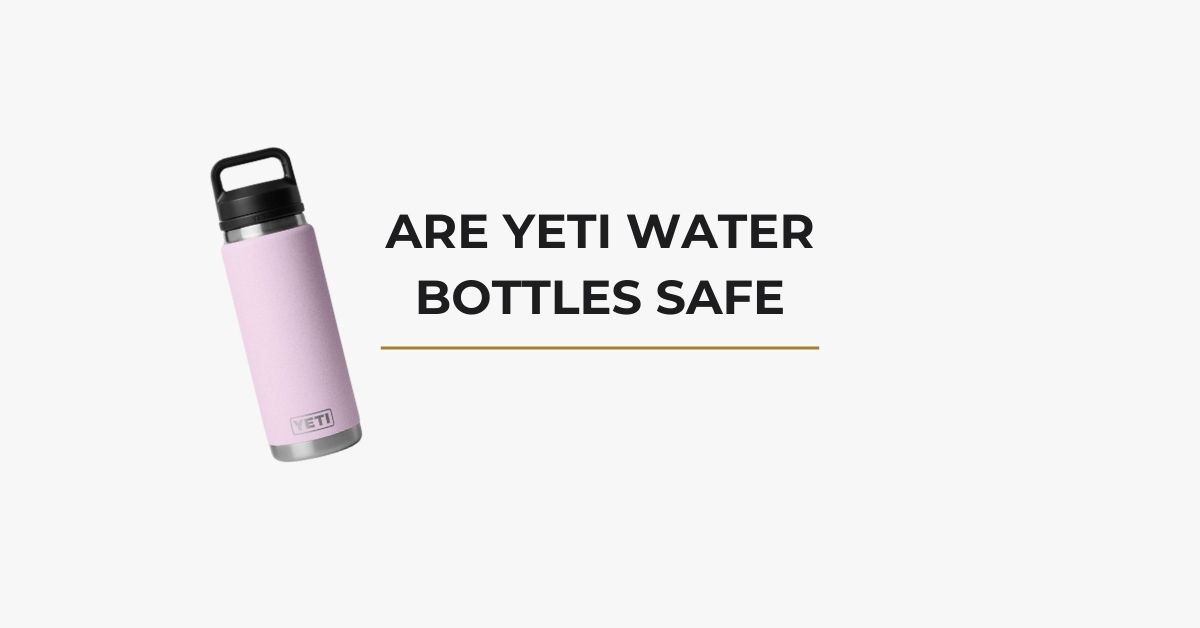
Yes, I guaranteed you that the YETI water bottles are entirely safe. I’ve used many YETI water bottles before, and I’ve had no complaints. All YETI drinkware products, including Rambler bottles, tumblers, jugs, etc., are safe, without a doubt, because they are made with food-grade stainless steel and BPA-free plastics.
Moreover, YETI bottles are dishwasher- and oven-safe. Plus, YETI bottles are dent-resistant and scratch-proof. The best part is that all the YETI Products are tested for safety at accredited third-party labs. That’s why YETI water bottles are safe.
Are YETI Water Bottles Safe
Yes, YETI water bottles are safe for daily use. All YETI drinkware is BPA-free from bottom to lid, and their products are made from premium 304 grade (food-grade) stainless steel with 18% chromium and 8% nickel. YETI products undergo rigorous third-party lab testing to meet FDA standards, California Prop 65, and EU regulations. Below, I list the safe and unsafe aspects.
Safe Aspects
- The YETI water bottles are made with BPA-free material (Lids, Straws).
- The body is made of 18/8 food-grade stainless steel.
- The bottles are dishwasher safe.
- Scratch, dent, and corrosion-resistant.
- The double-wall vacuum insulation keeps beverages hot or cold without creating warm zones that promote bacterial growth.
- YETI bottles are Freezer safe.
Unsafe Aspects
- YETI bottles are heavier than average.
- Storing acidic beverages is not safe if the inside of the bottle is scratched.
- Lids and Straws are not dishwasher safe.
Are YETI Water Bottles Non-Toxic?
Yes, YETI water bottles are non-toxic and safe for everyday drinking. All YETI drinkware and food-contact surfaces contain no harmful chemicals such as bisphenols (BPA, BPS) or endocrine disruptors like phthalates. The bottles are crafted from premium 304-grade stainless steel, also known as 18/8 food-grade steel. This means your drinks stay clean, free of chemical leaching.
YETI products undergo routine testing at accredited third-party labs to comply with US-FDA standards, California Prop 65, and EU REACH regulations. When tested for heavy metals, including lead, none are detected in the drinkware. The plastic lids are made of Eastman Tritan, which is also BPA-free. For families worried about toxins, YETI meets the strictest global safety benchmarks.
Are YETI plastic water bottles safe?
YETI plastic water bottles are safe to use. They are made from BPA-free, durable Tritan plastic, known for its non-toxicity and resistance to odours and stains. This material meets strict safety standards, ensuring no harmful chemicals leach into your drink, even after repeated use or exposure to heat.
Additionally, YETI bottles are designed to be long-lasting and eco-friendly alternatives to single-use plastics. Their sturdy construction prevents cracking or breaking, making them reliable for everyday hydration. Overall, YETI’s focus on quality materials and safety testing makes their plastic water bottles a trustworthy choice.
Are YETI Yonder Bottles Safe?
Yes, YETI Yonder bottles are entirely safe to use. The Yonder water bottle is made of durable, safe, BPA-free material, featuring 50% recycled plastic. Unlike stainless steel Ramblers, these lightweight plastic bottles skip the vacuum insulation, meaning there’s no lead sealing bead to worry about. The simple, single-wall design keeps things straightforward and toxin-free.
Yonder bottles are engineered to be both lightweight and shatter-resistant. One thing to note: do not use Yonder bottles with hot or carbonated beverages, or for storing food and perishables. The caps are 100% leakproof, and the BPA-free construction means no harmful chemicals transfer into your water. For hikers and travellers who want safe hydration without extra weight, Yonder delivers.
Do YETI bottles leach chemicals?
No, YETI bottles do not leach chemicals into your drinks. YETI products undergo routine testing and validation to meet established regulatory limits and are not known to leach any harmful chemicals or pose health risks. All drinkware with food-contact surfaces contains no toxic chemicals such as bisphenols (BPA, BPS) or endocrine disruptors like phthalates.
The stainless steel Ramblers use premium 304-grade food-grade stainless steel that won’t react with beverages. YETI products undergo rigorous testing at accredited third-party labs to ensure compliance with US-FDA standards, California Prop 65, and EU REACH regulations.
The plastic Yonder line uses BPA-free materials with 50% recycled content. Hot coffee, cold water, acidic drinks—none will pull chemicals from your YETI. Independent testing backs up these safety claims across their entire drinkware lineup.
Is it safe to drink out of a YETI cup every day?
Yes, drinking from a YETI cup daily is safe. YETI drinkware is made from food-grade 18/8 stainless steel, contains no BPA, and undergoes third-party lab testing to meet FDA safety standards. The materials that come into contact with your beverages pose no health risk under regular use.
Is the YETI water bottle dishwasher safe?
Yes, all YETI water bottles are dishwasher safe. This includes both Rambler and Yonder bottle styles, along with all their caps. The bottles are built with rugged 18/8 stainless steel construction that handles dishwasher cycles without damage. YETI drinkware is also BPA-free, so there’s nothing harmful leaching into your drinks during the wash process.
Before loading your bottle, remove the rubber lid gasket and toss it in the silverware basket for a thorough clean. Skipping this step can lead to mould or mildew forming in the hidden crevice between the gasket and the metal. Place the bottle body upside down on the top or bottom rack, keep caps on the top rack away from the heat, and let the dishwasher do the work.
Are YETI Bottles Microwave Safe
No, YETI bottles are not microwave safe. All YETI drinkware is made from 18/8 stainless steel, and metal should never be placed in a microwave. When microwaved, the steel can cause sparks, arcing, and even start a fire inside your appliance. YETI’s own product warnings state clearly that microwaves and their Ramblers don’t mix.
Beyond the fire risk, microwaving a YETI bottle won’t even warm your drink. The double-wall vacuum insulation that keeps beverages hot or cold for hours also blocks microwave energy from reaching the liquid inside. Your safest bet is to pour your drink into a ceramic or glass mug, heat it there, then transfer it back into your YETI to stay warm.
Are YETI bottles freezer safe?
No, YETI bottles are not Freezer safe. YETI’s own care instructions state clearly: “Do not place in freezer.” The main reason is basic physics—liquids expand when they freeze. This expansion puts pressure on the stainless steel walls and can crack the vacuum seal that makes your YETI work so well. Once that seal breaks, your bottle loses its ability to keep drinks cold for hours.
Why is my ice melting so fast in my YETI?
Your ice is melting fast because you’re likely filling your YETI with room temperature water, leaving the lid off, or exposing it to direct sunlight. A damaged vacuum seal from drops or dents can also break the insulation, letting heat seep in and melt your ice within hours instead of keeping it from melting all day.
Pre-chilling your YETI before use makes a big difference since a warm cup absorbs cold from the ice right away. Using water from the fridge instead of the tap, keeping the lid sealed, and storing your YETI in a shaded spot can easily double your ice retention time.
Do Yetis have harmful chemicals?
No, YETI drinkware does not contain harmful chemicals that can affect your health. All YETI products with food-contact surfaces are free of BPA, BPS, phthalates, and other endocrine disruptors, and undergo third-party lab testing to meet FDA standards and California Prop 65 regulations.
YETI cups use a small lead-containing sealing bead for vacuum insulation, but it’s fully encapsulated and inaccessible during everyday use. When tested, no lead is detected on drinking surfaces, with detection limits below 0.002 mg/kg.
Does YETI have microplastics?
No, YETI stainless steel Rambler drinkware does not release microplastics into your drinks. YETI products are made from 18/8 food-grade stainless steel, and unlike plastic, stainless steel doesn’t degrade or leach particles, keeping your drinks free of microplastics.
YETI lids use BPA-free polypropylene and Eastman Tritan materials that undergo routine testing and are not known to leach harmful chemicals. For those wanting zero plastic contact, YETI’s stainless steel body remains a safer choice than plastic bottles, which release thousands of micro- and nanoplastic particles per litre depending on storage conditions.
Why can’t you put carbonated drinks in a Yeti?
You shouldn’t put carbonated drinks in a Yeti because the sealed lid traps pressure from the bubbles, causing the container to build up pressure and potentially leak or burst. Yeti tumblers are designed for hot or cold beverages, but not for fizzy drinks that release gas.
Additionally, shaking or moving a carbonated drink inside a Yeti can increase pressure quickly, making spills or accidents more likely. For safety and to keep your drink fresh, it’s best to use containers made explicitly for carbonated beverages.
Conclusion
In conclusion, YETI water bottles—particularly their stainless steel Rambler series—are widely regarded as safe for everyday use when used as intended. While no reusable bottle is entirely risk-free if damaged or misused, properly maintained YETI bottles meet or exceed current safety standards and remain a reliable, non-toxic choice for hydration.
