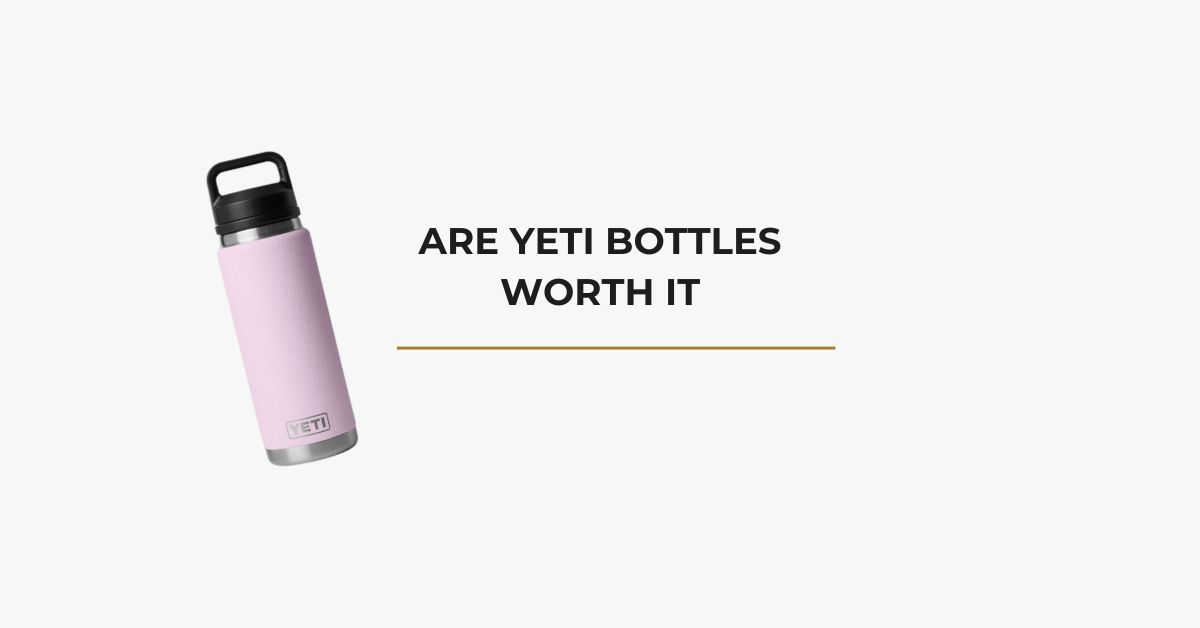
We all know that YETI is a premium category water bottle with a high price point. But don’t worry, YETI water bottles are really worth it. Why am I saying this? Look, YETI bottles provide long-lasting temperature retention (up to 12 hours) and are made from high-quality stainless steel, which is scratch-resistant, odour-proof, and wear-resistant.
The best part is that YETI bottles and tumblers are dishwasher safe, as they withstand high temperatures. The lids and straws are also BPA-free. By combining all of these features, I’d definitely say these YETI water bottles are worth your investment.
Why is YETI so expensive?
YETI costs more because of rotomolded construction, thick walls, and high-density foam insulation that keeps ice frozen for days. They use rotomolding—a manufacturing process in which molten plastic is tumbled in a mould until it forms a seamless shell. This makes their coolers nearly indestructible compared to cheaper blow-moulded alternatives.
Beyond materials, you’re paying for brand positioning. YETI priced its products at a premium ($300-$1,300), signalling that they were not for casual consumers but for serious outdoorspeople. They never discounted—no Black Friday deals, no clearance sales. This creates a sense of exclusivity, keeping the price high.
What brand is as good as YETI but cheaper?
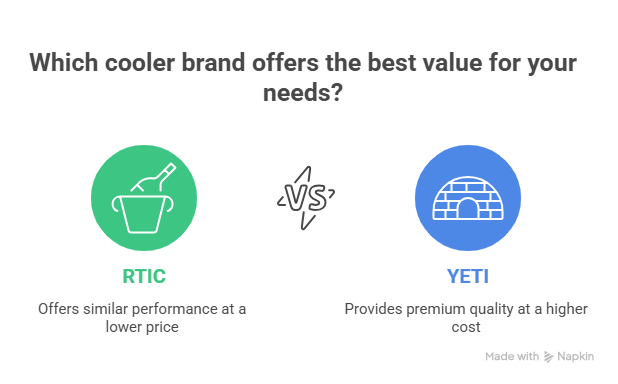
RTIC is the best YETI alternative for most buyers. It offers nearly identical rotomolded construction and ice retention at 30-50% lower prices. A 45-quart RTIC runs around $239 compared to YETI’s $325 for a similar capacity. Other solid options include Igloo IMX, Coleman, and Pelican coolers.
The price gap exists because RTIC sells direct-to-consumer, cutting out retail markups. Independent testing shows RTIC coolers keep ice frozen 3-4 days, matching YETI’s performance. Budget shoppers also like Igloo’s IMX series at $99 or Coleman’s steel-belted coolers for casual weekend use.
What are the disadvantages of YETI?
The main disadvantages of YETI are high prices, heavy weight, and the lack of wheels on most models. A Tundra 45 costs $325 while competitors offer similar performance for $100-150 less. The 23-pound empty weight makes carrying difficult when fully loaded with ice and food.
YETI coolers also lack built-in features like bottle openers, cup holders, and tethered drain plugs that cheaper brands include. Ice retention, while solid at 5-7 days, falls short of Pelican and Orca coolers. You’re partly paying for the brand name, not just performance.
Is YETI losing popularity?
No, YETI is not losing popularity, but it faces growing competition. The brand reported $1.82 billion in annual revenue and expanded into 15 lifestyle communities. However, U.S. drinkware sales dropped 4% in 2025 while Stanley outsells YETI on Amazon with 595,800 monthly units versus 357,000.
Stanley’s viral TikTok success and trendy colours captured younger buyers, pushing YETI to second place in the tumbler wars. Still, YETI’s cooler sales grew 12% and international revenue jumped 14%. The brand remains strong but no longer dominates drinkware as it did before.
Do Yeti bottles sweat?
No, YETI Rambler bottles and tumblers do not sweat. They feature a patented No Sweat Design with double-wall vacuum insulation that prevents condensation from forming on the outside. Your hands stay completely dry whether you’re holding ice-cold water or hot coffee inside.
The vacuum between the two stainless steel walls blocks temperature transfer to the exterior surface. If your YETI sweats, the vacuum seal may be compromised, and it should be replaced under warranty. Note that YETI’s non-insulated Yonder plastic bottles will sweat since they lack vacuum insulation.
Why can’t you put carbonated drinks in a Yeti?
You can’t put carbonated drinks in sealed YETI bottles because pressure buildup can make the cap difficult to remove or forcefully eject, and cause injury. Carbon dioxide gas expands inside the airtight container, creating dangerous pressure that pushes against the lid over time.
YETI tumblers with open MagSlider lids are fine for soda since gas can escape freely. The issue only applies to sealed Rambler bottles with screw-on caps. The stainless steel itself resists carbonation-induced corrosion, so it’s purely a safety concern about exploding lids.
Who is Yeti’s most significant competitor?
YETI’s biggest competitor is Stanley in drinkware and RTIC in coolers. Stanley outsells YETI on Amazon, with 595,800 monthly units compared to 357,000, driven by viral TikTok success and trendy colours that appeal to younger female buyers. Stanley’s revenue hit $750 million.
For coolers, RTIC offers nearly identical rotomolded products at 40-50% lower prices through direct-to-consumer sales. Other major competitors include Igloo (500+ products), Hydro Flask (water bottles), and Pelican (premium ice retention). Each targets different price points and audiences.
How to tell a knock-off YETI?
To spot a knockoff YETI, check for spelling errors on the labels, a blue-tinted lid instead of a clear one, a missing QR code sticker on the bottom, and a lighter weight than authentic models. Real YETI tumblers have crisp laser-engraved logos, smooth finishes, and the MagSlider magnetic lid mechanism.
Fake YETIs also fail the ice test, melting cubes in 1-2 hours versus 6+ hours for genuine products. Always verify the serial number on the bottom matches YETI’s records. The safest approach is to buy directly from YETI.com or authorized retailers, as unusually low prices often signal counterfeits.
How long does dry ice last in a YETI cooler?
Dry ice lasts 24-48 hours in a YETI cooler when using one 10-pound block per 15 inches of cooler length. YETI’s Tundra, Roadie, and Tank hard coolers are all compatible with dry ice. The thick rotomolded insulation helps slow sublimation and keeps contents frozen solid.
For best results, wrap dry ice in newspaper, minimize the amount of empty air space, and keep the cooler in the shade. Dry ice delivers three times the cooling power of regular ice at -109°F. Never use dry ice in YETI Hopper soft coolers, and always handle it with gloves to prevent burns.
Why is a Yeti cup lid magnetic?
YETI cup lids are magnetic because the MagSlider design allows smooth one-handed opening and closing while keeping drinks contained. The magnet creates a reliable sliding mechanism that prevents splashes on the go and adds a barrier to stop heat or cold from escaping quickly.
The removable magnetic slider also pops off easily for thorough cleaning, unlike complicated traditional lids that trap grime. The crystal-clear lid lets you check drink levels without opening the lid. Note that MagSlider lids are splash-resistant but not fully leakproof, so they won’t prevent spills if completely tipped over.
Can you put hot liquids in a Yeti bottle?
Yes, you can safely put hot liquids in YETI Rambler bottles and tumblers. The double-wall vacuum insulation and 18/8 kitchen-grade stainless steel handle extreme temperatures without damage. YETI keeps coffee and tea hot for 4-6 hours or longer, depending on conditions.
However, please avoid using the Straw Cap or Straw Lid with hot beverages since they’re not designed for heat. Don’t overfill past the solid ring below the threads, and always open carefully since YETI locks in hot temperatures. The plastic Yonder bottles are for cold drinks only.
Are yetis unhealthy?
No, YETI cups are not unhealthy. They’re made from FDA-approved 18/8 food-grade stainless steel and are completely BPA-free. Independent testing by Lead Safe Mama found no detectable lead inside or outside YETI cups, confirming they’re safe for daily beverage use.
YETI products undergo rigorous third-party lab testing to meet California Prop 65, US-FDA, and EU safety standards. While a small lead-containing solder bead is used during manufacturing for vacuum insulation, it’s fully encapsulated and inaccessible. Your drinks never come into contact with any harmful chemicals.
Conclusion
In conclusion, whether YETI bottles are worth it depends mainly on what you value in a drink container. If you prioritize durability, insulation, and long-term reliability — especially for outdoor adventures, daily commuting, or heavy use — YETI bottles deliver excellent performance and often outlast cheaper alternatives.
