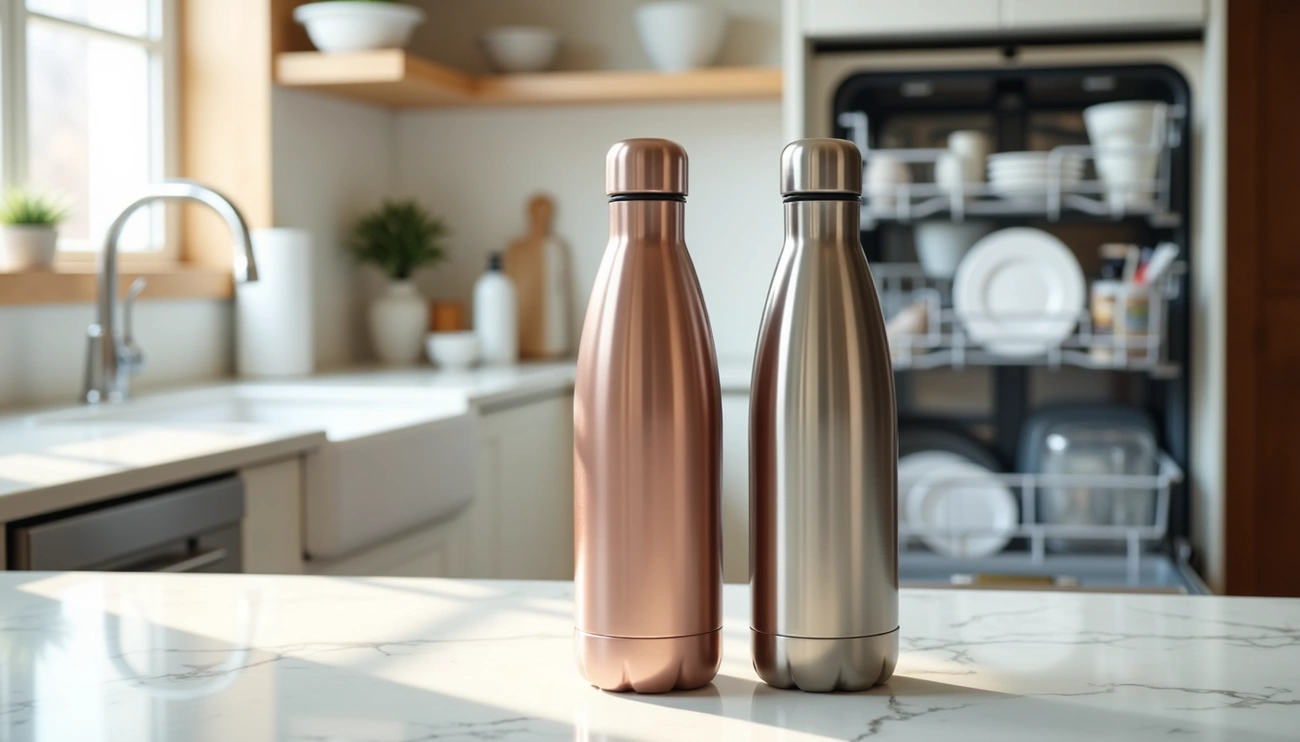
No, traditional S’well water bottles are not dishwasher safe. High dishwasher heat can damage the vacuum insulation and chip the exterior finish. Clean classic stainless steel S’well bottles by hand using warm, soapy water. Some newer S’well tumblers and glass bottles are labeled top-rack dishwasher safe, so always check model-specific care instructions.
What S’well Says About Dishwasher Safety
When checking the manufacturer’s guidelines for S’well bottles, one message stands clear: handwashing is strongly preferred over dishwasher cleaning. Let’s dive into what the company officially recommends and why these guidelines matter for maintaining your bottle’s performance and appearance.
Official care instructions from S’well
S’well provides specific care instructions on their official website regarding the maintenance of their products. According to the company, S’well products “should be cleaned regularly” with a straightforward recommendation to wash “with warm water and soap after every use and drying and storing it with the top off”.
For thorough cleaning, S’well suggests using their specialized Bottle Brush, which helps reach those narrow areas inside the bottle. This specialized cleaning tool becomes particularly valuable considering the bottle’s design with a narrow mouth opening.
Additionally, the company explicitly warns against certain practices:
- Never submerge your bottle and cap in water for extended periods as this interferes with the vacuum seal
- Do not place your S’well in the microwave or freezer
- Avoid overfilling the bottle, especially with hot liquids
Notably, most S’well products come with the clear instruction that they are “NOT dishwasher safe”. Furthermore, the company emphasizes following the individual care instructions specific to each product, as there are exceptions. For instance, the Glass Original Bottle is fully dishwasher safe, including its silicone sleeve and lid.
Why handwashing is recommended
The reasons behind S’well’s handwashing recommendation stem from several key concerns about the dishwasher environment. First and foremost, the combination of high heat and aggressive detergents in dishwashers can damage the bottle’s exterior finish.
Moreover, running a S’well bottle through the dishwasher risks causing the paint to chip, which would permanently alter the bottle’s appearance. Beyond esthetic concerns, though, lies a more functional issue: dishwasher cleaning can make “the vacuum seal become ineffective”.
This vacuum seal is critical for the bottle’s primary purpose—maintaining temperature. The high temperatures inside dishwashers can compromise this seal, leading to reduced thermal performance. Essentially, the insulation layer may become less effective, gradually diminishing the bottle’s ability to keep beverages hot or cold.
For optimal maintenance, S’well recommends gentle cleaning with warm soapy water using non-abrasive materials that won’t scratch the finish. After cleaning, thoroughly rinsing with clean water removes any soap residue that might affect the taste of future beverages.
What happens if you ignore the advice
Disregarding S’well’s care instructions carries both immediate and long-term consequences for your bottle. Initially, you might notice visible damage to the exterior—chipped paint and a deteriorating finish that affects the bottle’s appearance.
More significantly, though, dishwasher cleaning gradually weakens the materials used in the bottle’s insulation. This degradation can result in the bottle’s inability to maintain desired temperatures for hot or cold beverages as effectively as before.
Over time, users typically observe quicker temperature changes in their drinks—the once reliable insulation properties begin to fail. The vacuum seal, which is essential for temperature retention, becomes compromised after repeated dishwasher cycles.
Furthermore, the exposure to extreme heat may cause warping or deformation of materials. Since the dishwasher environment combines both high temperatures and harsh detergents, each cycle potentially contributes to cumulative damage that shortens the lifespan of your S’well bottle.
In essence, although occasionally using the dishwasher might seem convenient, the long-term effects on both appearance and functionality make handwashing the wiser choice for preserving your S’well investment.
Can You Put S’well Bottles in the Dishwasher?
The temptation to toss your S’well bottle into the dishwasher after a long day is understandable. Yet, this convenience comes with considerable consequences for your bottle. Let’s explore what really happens when you ignore the manufacturer’s recommendations.
Risks of dishwasher use
The primary concern with dishwasher cleaning stems from the extreme environment inside these machines. Even on gentle cycles, dishwashers generate heat levels that can be harmful to S’well’s specialized construction. The high temperatures inside dishwashers can damage the vacuum seal that’s essential for the bottle’s insulating properties.
In addition to heat damage, the harsh detergents typically used in dishwashers pose another threat. These strong cleaning agents can deteriorate the exterior finish of your bottle, potentially leading to a lackluster appearance over time. The combination of heat and chemicals creates a particularly hostile environment for S’well bottles.
Furthermore, S’well explicitly states that their bottles should not be “submerged in water for long periods of time as this will interfere with the vacuum seal”. Consequently, the extended water exposure during a dishwasher cycle directly contradicts this care instruction.
User experiences and damage reports
Many S’well owners have learned about dishwasher risks the hard way. User reports consistently mention two primary issues after dishwasher cleaning: paint chipping and insulation failure. Once this damage occurs, there’s no way to restore the bottle to its original condition.
One user on Reddit noted that after multiple dishwasher cycles, water began leaking from the bottle’s bottom seam whenever tilted for drinking. Another observed that coffee in their dishwasher-cleaned insulated bottle quickly reached room temperature, indicating the loss of insulation effectiveness.
Nevertheless, some users report experimenting with modified dishwasher settings. One Reddit user claimed that running the dishwasher on a “Light cycle” where temperatures never exceed 110°F (43°C) might be less damaging. Yet, this remains contrary to official recommendations and still carries risks.
Impact on insulation and exterior finish
The most serious functional consequence of dishwashing involves the bottle’s insulation capabilities. The ThermaS’well™ technology relies on an intact vacuum seal between the inner and outer walls. Dishwasher cleaning can compromise this seal, causing reduced performance over time.
Once compromised, you’ll notice beverages no longer stay at desired temperatures for as long. Hot drinks cool faster, and cold drinks warm more quickly – effectively negating the primary benefit of owning an insulated bottle.
Regarding esthetics, the exterior finish suffers visible deterioration. The vibrant colors and designs that make S’well bottles distinctive can fade, chip, or become discolored after dishwasher cleaning. The powder coating on the exterior is particularly vulnerable to the harsh dishwasher environment.
Interestingly, while the metal body of the bottle might initially seem sturdy enough for dishwasher cleaning, user experiences suggest that the small components are often the first to fail. Plastic parts, gaskets, and plugs in the lids can absorb detergent smells or become damaged, resulting in leaks.
To summarize, the official stance is unambiguous – S’well bottles are “NOT dishwasher safe”. The bottles are “happiest when hand-washed and air-dried”, a small investment of time that pays dividends in the longevity and performance of your bottle. As tempting as the dishwasher shortcut may be, the potential for permanent damage makes it a risky proposition for anyone who values their S’well bottle’s performance and appearance.
How to Properly Clean a S’well Bottle
Keeping your S’well bottle clean doesn’t require a dishwasher—in fact, proper hand cleaning is simple and effective when you know the right techniques. S’well recommends cleaning their bottles regularly to maintain freshness and extend their lifespan.
Daily cleaning routine
Establishing a consistent cleaning routine prevents bacteria buildup and unpleasant odors. Here’s a quick process that takes just minutes:
- Empty all remaining liquid from your bottle
- Rinse with warm water to loosen residue
- Add a few drops of mild dish soap
- Fill halfway with warm water and scrub thoroughly with a bottle brush
- Pay special attention to the mouth and cap threads where bacteria often accumulate
- Rinse completely until water runs clear with no soap bubbles
- Allow to air dry completely with the cap off
Remember to clean your S’well after every use, particularly if you’re switching between beverages like coffee, tea, or smoothies. This practice prevents residue buildup and odd flavors.
Deep cleaning with tablets
Even with regular washing, your S’well bottle may need occasional deep cleaning to remove stubborn stains, mineral deposits, or lingering odors. Cleaning tablets offer a convenient solution:
First, fill your bottle with water and add a cleaning tablet designed for water bottles. Let it sit for at least 30 minutes—or overnight for tougher issues—then rinse thoroughly. These tablets effectively eliminate unpleasant smells and are particularly useful for stainless steel bottles where mildew is harder to spot.
Don’t want to purchase special tablets? Try these DIY alternatives:
- Baking soda and hydrogen peroxide: Mix a tablespoon of each in your bottle, fill with water, leave overnight, and rinse
- Vinegar solution: Fill with equal parts white vinegar and warm water, soak overnight, then scrub and rinse
- Baking soda paste: For visible stains, create a paste with baking soda and water, apply directly to stains, let sit for 15 minutes, then scrub and rinse
Tools that make cleaning easier
The right tools make cleaning your S’well bottle significantly simpler. S’well’s own Bottle Brush is specifically designed to clean those hard-to-reach places in their bottles. Its strong bristles effectively loosen debris with just a quick scrub.
The bottle brush is particularly valuable because of S’well bottles’ narrow mouth design, which makes cleaning with standard sponges nearly impossible. Look for brushes with abrasive bristles that can reach the bottom and effectively clean the sides in circular motions.
Don’t forget about the cap components—bacteria and fungus often hide in threads and seals. Disassemble any removable parts and clean thoroughly with soapy water, paying special attention to crevices where mold might develop.
With these proper cleaning methods, your S’well bottle will maintain its performance and appearance without ever needing to risk dishwasher damage.
Are S’well Bottles Safe to Use?
Beyond cleaning considerations, many S’well users wonder about the overall safety of these popular insulated bottles. Given that we use them daily for our beverages, understanding their material composition and safety features becomes crucial.
BPA-free and food-grade materials
S’well manufactures their bottles using high-quality, 18/8 food-grade stainless steel, a material known for its durability and resistance to rust. Unlike some plastic alternatives, S’well products don’t require an interior liner, reducing potential exposure to chemicals.
The company explicitly states that all their bottles are BPA/BPS-free, making them a safer alternative to single-use plastic bottles that might contain these potentially harmful compounds. This status has been independently verified—S’well products are certified to meet all regulatory requirements by accredited testing facilities.
Indeed, S’well has earned recognition as a certified B Corporation, confirming their commitment to meeting strict standards for social and environmental performance. This certification speaks to their dedication to creating products that prioritize both consumer safety and sustainability.
Lead concerns and Proposition 65
S’well assures customers that their products comply with California’s Proposition 65 regulations, some of the strictest chemical safety standards in the United States. They likewise adhere to Title 21 of the FDA Code of Federal Regulations governing food contact materials.
Yet, some uncertainty remains regarding lead use in manufacturing. As one source notes, “There’s no indication of lead use in the manufacturing of S’well bottles on its website… But, there has not been any high-quality testing done on S’well products as of now—so we can’t be completely sure it’s lead-free”.
This concern primarily involves the potential use of lead-based solder in sealing the bottle’s base, a common practice in insulated bottle manufacturing. When asked directly about lead content, S’well responded that their products “comply with federal standards and California Proposition 65 requirements relating to lead and other contaminants”.
How to check for damage or wear
Regular inspection of your S’well bottle helps ensure ongoing safety. Food safety experts suggest replacing stainless steel water bottles approximately every three years, though this timeline varies based on maintenance habits.
Watch for these warning signs that indicate it’s time for replacement:
- Visible cracks, dents, or scratches, especially on internal surfaces or near lid seals
- Difficulty maintaining temperature (indicating insulation damage)
- Unusual odors that persist despite thorough cleaning
- Leaks or damage to the bottle’s seals
Remember that damaged areas can harbor bacteria and potentially form biofilms—microorganisms trapped in a protective substance that resists some cleaners. For this reason, keeping your S’well bottle in good condition isn’t just about maintaining its appearance but ensuring your continued health safety.
Alternatives That Are Dishwasher Safe
Fortunately, if dishwasher convenience is a top priority, several excellent alternatives to S’well offer this feature without compromising quality. These options combine durability with easy maintenance for busy lifestyles.
Owala FreeSip
The Owala FreeSip has gained remarkable popularity, with its hashtag viewed 272 million times on TikTok. This innovative bottle offers two distinct drinking methods—a straw and a larger opening for “guzzling” that conforms to your mouth.
Regarding dishwasher safety, Owala provides clear guidelines: the lids are top-rack dishwasher safe, and straws can go in the silverware bin. While stainless steel cups are technically dishwasher safe, handwashing is recommended to preserve the finish. For Tritan plastic Owala bottles, both the cup and lid are fully dishwasher safe.
Hydro Flask
Hydro Flask made a significant change in 2020—all their powder-coated bottles became officially dishwasher safe. Prior to this update, Hydro Flask bottles risked damage to both their vacuum seal and exterior finish when machine washed.
The brand has built a reputation for reliability and backs their bottles with a limited lifetime warranty. Customers appreciate the simple design that “does one thing well” whether at a desk, commuting, or at the gym.
Other lead-free and dishwasher-safe options
Several additional brands offer dishwasher-safe, lead-free alternatives:
- Yeti Rambler: Available in multiple sizes (18-64 ounces) with a protected drinking spout
- Swig: All products are dishwasher safe with “several years mileage” reported by satisfied users
- Ohelo: All water bottles and travel cups are 100% leakproof and dishwasher safe
When selecting a safe water bottle, primarily look for lead-free certification, BPA/BPS-free materials, no plastic lining inside caps, and dishwasher-safe design. Other recommended brands include BKR, Bink, Kerilyn, Lifefactory, Pura, Simple Modern, and W&P.
Conclusion
While many of us wish for the convenience of tossing our S’well bottles in the dishwasher after a long day, the evidence clearly shows this shortcut comes at a significant cost. Though made from durable 18/8 food-grade stainless steel, these bottles simply aren’t designed for dishwasher cleaning. Consequently, ignoring the manufacturer’s recommendations risks permanent damage to both the bottle’s appearance and its essential insulating properties.
Handwashing remains the best approach for maintaining your S’well investment. Actually, the process takes just minutes with the right tools like a bottle brush for those hard-to-reach areas. For stubborn odors or stains, occasional deep cleaning with specialized tablets or DIY solutions such as baking soda and vinegar will keep your bottle fresh without compromising its integrity.
