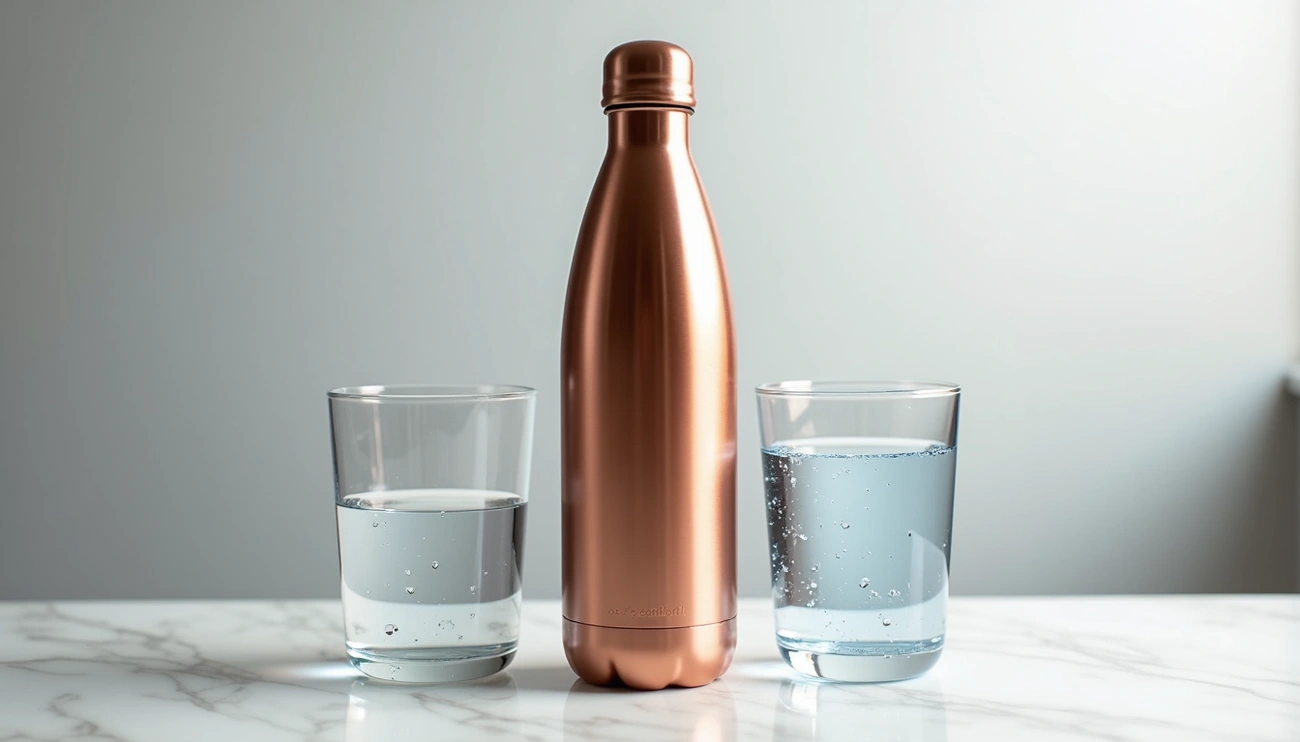
Copper water bottles are safe when used correctly and in moderation. Copper has natural antimicrobial properties that reduce bacterial growth in water. Do not store water for more than 8–12 hours, and avoid acidic liquids, because excess copper intake can cause nausea and stomach irritation.
What Is Copper Water and How Is It Made?
Copper water is drinking water stored in vessels made entirely of copper. This ancient practice allows water to naturally acquire trace amounts of copper ions, creating a unique beverage that’s fundamentally different from regular tap or bottled water.
Definition: Water stored in copper vessels
Copper water is water stored in a copper container for a specific period. These containers are crafted entirely from copper—a reddish-brown metallic element considered an essential nutrient in the human diet. When water sits in a copper vessel, a natural process occurs in which small amounts of copper ions dissolve into the water, creating copper-infused water. This water exhibits properties not found in regular drinking water, primarily due to the presence of copper ions.
How copper ions leach into water
The science behind copper water involves a process called the oligodynamic effect. When water contacts the copper surface, a small amount of copper ions gradually dissolves into the liquid. Several factors affect this leaching process:
- Storage duration: Water must remain in the vessel for at least 8-10 hours to gain beneficial copper ions
- Water acidity: Lower pH (more acidic water) increases copper leaching
- Temperature: Higher temperatures accelerate the oxidation process
- Water hardness: Softer water facilitates more copper leaching
Laboratory tests show that copper levels in water can rise from 0.038 ppm to 0.481 ppm (mg/L) within 24 hours of storage in copper vessels. Nevertheless, these levels remain well below any concerning threshold.
Ayurvedic origins and modern popularity
The tradition of storing water in copper vessels dates back thousands of years, with roots deeply embedded in Ayurvedic medicine. Ancient Indian and Egyptian civilizations recognized copper’s antimicrobial properties. In Ayurveda, copper-infused water is known as “Tamra Jal” (Tamra meaning copper, Jal meaning water).
Ayurvedic wisdom suggests that this practice helps balance the three doshas—Vata, Pitta, and Kapha—believed responsible for a person’s physical, mental, and emotional health. Furthermore, the ancient Egyptians documented the use of copper for water sterilization around 2200 B.C.
Today, copper water bottles have emerged as a fashionable wellness trend, appealing to health-conscious individuals seeking alternatives to plastic containers. Their rising popularity stems from both their potential health benefits and stylish aesthetic appeal.
Antibacterial Properties: What the Science Says
Scientific research confirms copper’s antimicrobial properties are not merely folkloric claims but substantiated by rigorous laboratory evidence. Multiple studies demonstrate why copper vessels might be more than just aesthetically pleasing containers for your daily hydration.
Lab Results: 100% kill rate of harmful bacteria
Laboratory studies consistently show copper’s remarkable ability to eliminate dangerous microorganisms. Research published in the Journal of Health, Population and Nutrition revealed that water contaminated with harmful bacteria such as E. coli and Salmonella became completely free of bacteria after 16 hours in copper vessels. Scientists were unable to recover any bacteria from the samples, even after attempting enrichment culture techniques. Additionally, studies showed 99.999% bacterial reduction in multidrug-resistant E. coli isolated from various clinical samples after 24 hours of contact with copper surfaces.
Contact Killing: How copper disrupts cell walls
The term “contact killing” specifically describes copper’s unique antibacterial mechanism. Upon contact, copper ions penetrate bacterial cell walls, causing extensive structural damage. This process disrupts essential cellular functions and ultimately leads to cell death. Copper also generates reactive oxygen species within bacterial cells, causing oxidative damage that further impairs vital cellular processes. Consequently, bacteria exposed to copper surfaces rapidly lose membrane integrity, resulting in cytoplasmic leakage and cell destruction.
Storage Time: Why 16+ hours is critical
The duration water remains in a copper container significantly impacts its purification level. Research indicates that bacterial reduction follows a time-dependent pattern: a 1-fold reduction occurs after 2 hours, a 2-fold reduction after 6 hours, a 3-fold reduction after 12 hours, a 4-fold reduction after 18 hours, and a 5-fold reduction after 24 hours. For maximum antibacterial effect, scientists recommend a minimum storage time of 16 hours. Storing water for shorter periods may not provide complete bacterial elimination.
Comparison with other purification methods
Copper outperforms many other antimicrobial materials. Unlike stainless steel, where bacteria survive for days or even weeks, copper surfaces achieve 99.9% bacterial elimination within 2 hours. Comparative studies with silver-containing coatings demonstrated that copper performs better than silver against MRSA and E. coli O157:H7. Notably, copper-impregnated materials showed greater bacterial reduction compared to silver dressings and other antimicrobial treatments in controlled laboratory tests.
Is Copper Water Safe to Drink Daily?
Despite copper’s proven antibacterial benefits, many people remain concerned about safety. The good news? Scientific testing provides clear answers about whether drinking from copper vessels poses any health risks.
WHO Guidelines: 2mg/L copper limit
The World Health Organization established 2mg/L (2000 ppb) as the maximum acceptable concentration of copper in drinking water. This guideline ensures water remains safe for consumption while acknowledging copper’s essential role in human health. Although some countries have stricter standards—the US Environmental Protection Agency set its action level at 1.3 mg/L—generally, health authorities agree that moderate copper exposure poses minimal risk.
Copper Leaching: Real test results (177 ppb)
Independent laboratory studies measuring the amount of copper that actually leaches into water stored in copper vessels yield reassuring results. Research shows that water stored in copper containers contains approximately 177 ± 16 ppb of copper, which is less than 1/10 of the WHO’s permissible limit. Even after water remains in copper bottles for extended periods, testing indicates copper levels rarely exceed 0.15 mg/L—still well below safety thresholds.
Copper Water Bottle Poisoning: Is it a real risk?
Copper toxicity primarily occurs when consuming water with excessive copper levels—levels far beyond those produced by properly maintained copper bottles. Symptoms of copper poisoning include nausea, vomiting, abdominal pain, and diarrhea. Nevertheless, these issues typically arise only when copper exceeds 4.0-6.0 mg/L, approximately 20 times higher than levels found in properly stored copper water.
Are pure copper water bottles safe for long-term use?
For most healthy individuals, pure copper water bottles present minimal risk when used appropriately. Accordingly, the research indicates copper vessels are safe for daily use, provided they’re properly cleaned and maintained. Experts recommend limiting copper water intake to about 3 cups daily and avoiding storage for more than 16 hours to maintain optimal safety margins.
How to Use Copper Bottles Safely and Effectively
To maximize benefits while avoiding potential risks, proper usage of copper water bottles requires attention to several key factors. Following expert recommendations ensures you can enjoy the advantages of copper vessels without concern for copper toxicity.
Daily Intake: How much copper water is safe?
The World Health Organization recommends no more than 0.47 mg of copper per cup (2 mg per litre) of water. Most health experts suggest limiting copper water intake to approximately three cups (710 mL) daily. Exceeding this recommendation may lead to excessive copper consumption, potentially causing digestive issues or, in extreme cases, liver damage. If you’re new to copper water, start gradually, allowing your body to adjust before increasing your intake. Remember that copper water should complement—not replace—a balanced diet rich in copper, such as leafy greens, nuts, and seeds.
Cleaning Tips: Preventing oxidation and residue
Regular cleaning maintains your bottle’s effectiveness and prevents tarnish buildup that could affect the taste of the water. For natural cleaning:
- Mix lemon juice with salt or use tamarind paste
- Apply the mixture throughout the bottle, focusing on tarnished areas
- Let sit briefly, then rinse thoroughly with warm water
Alternatively, combine vinegar with salt or create a baking soda paste for deeper cleaning. Clean your copper bottle at least once weekly—more frequently with heavy use. Importantly, never use harsh detergents, dishwashers, or abrasive scrubbers, as these damage the copper surface and diminish its properties.
Storage Guidelines: Best practices for safety
For optimal benefits, fill your copper bottle with room-temperature water and let it sit for 6-8 hours, ideally overnight. Discard water stored longer than 16 hours to ensure freshness. Primarily, only use copper bottles for water—never for acidic beverages like lemon water, juices, or carbonated drinks, as acids react with copper, potentially releasing harmful compounds. Moreover, avoid refrigerating copper bottles or filling them with hot water, as extreme temperatures can alter copper’s natural properties and increase leaching.
Are copper-lined water bottles safe alternatives?
Copper-lined bottles provide a middle-ground option for those concerned about direct copper exposure. These typically feature an inner lining of stainless steel or another food-grade material with copper comprising the exterior layer. This design limits copper’s contact with water while maintaining its aesthetic appeal. Therefore, lined bottles generally pose minimal risk of copper toxicity, making them suitable alternatives for daily use, particularly for those with copper sensitivity or certain health conditions affecting copper metabolism.
Conclusion
After examining the scientific evidence, we can confidently answer the question: Are copper water bottles safe? The data clearly shows that properly used copper vessels present minimal health risks while offering significant antibacterial benefits. Laboratory tests confirm that water stored in copper containers contains approximately 177 ppb of copper—less than one-tenth of the WHO’s 2mg/L safety threshold.
Throughout history, copper vessels have demonstrated remarkable effectiveness against harmful pathogens. The complete elimination of bacteria such as E. coli and Salmonella after 16 hours of storage provides compelling evidence of copper’s natural purification abilities. These antibacterial properties, when used properly, make copper bottles a viable alternative to plastic containers for daily hydration.
Nevertheless, certain precautions remain essential. Water should stay in copper vessels between 6-16 hours—long enough to gain beneficial copper ions yet not so long that excessive leaching occurs. Additionally, these bottles should contain only plain water, not acidic beverages that might react with the metal surface.
Though some might worry about copper toxicity, real-world testing proves these concerns are largely unfounded when following basic guidelines. Limiting intake to three cups daily, cleaning bottles regularly, and avoiding extreme temperatures ensures safe, beneficial use over time.
