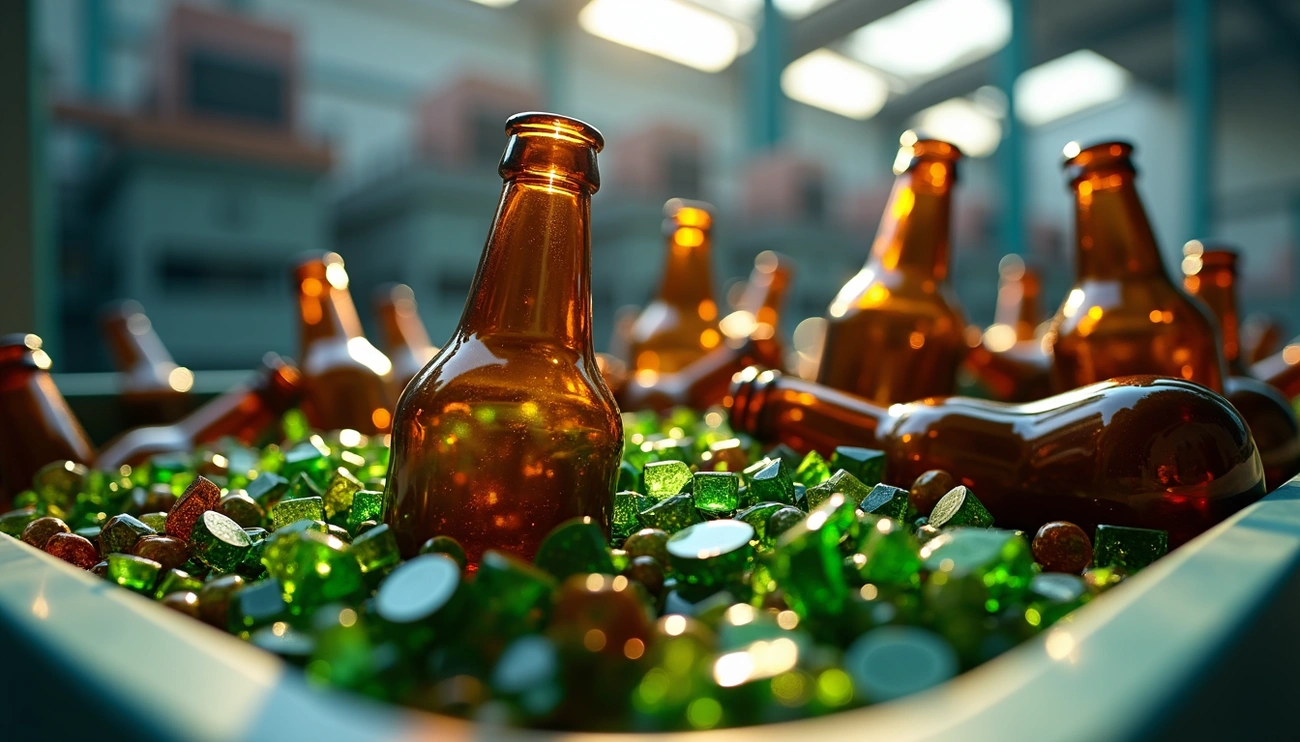
Yes, beer bottles are recyclable. Glass beer bottles are accepted in most curbside recycling programs and are infinitely recyclable, meaning they can be made into new bottles repeatedly. Rinse bottles before recycling and follow local guidelines, especially if the beer bottle is plastic, which has different recycling rules.
What makes beer bottles recyclable
Beer bottles boast exceptional recyclability compared to many other packaging materials. Furthermore, understanding what makes them recyclable reveals why they’re a preferred choice for environmentally-conscious consumers.
Glass is infinitely recyclable
Glass possesses a remarkable characteristic – it can be recycled endlessly without any loss in quality or purity. Unlike other materials that degrade with each recycling cycle, the molecular structure of glass remains stable during melting and reforming. This infinite recyclability means glass bottles created decades ago might still be circulating in today’s recycling systems.
The bottle-to-bottle recycling process creates a closed-loop system where glass containers become the primary resource for producing new ones. Notably, new beer bottles already contain an impressive 96.7% recycled glass on average—substantially more than most plastic or aluminum containers.
Energy and material savings from recycling
Recycling a single beer bottle saves enough energy to:
- Power a 100-watt light bulb for 4 hours
- Run a computer for 30 minutes
- Operate a television for 20 minutes
In addition, every 10% increase in cullet (recycled glass) usage reduces energy consumption by approximately 3% and carbon emissions by 5%. This happens because cullet melts at temperatures about 100°F lower than raw materials, requiring significantly less energy during manufacturing.
The resource conservation is equally impressive. Each ton of recycled glass saves:
- 1,300 pounds of sand
- 410 pounds of soda ash
- 380 pounds of limestone
- 160 pounds of feldspar
Overall, recycling one ton of glass bottles saves the equivalent of 3.8 barrels of oil and reduces carbon dioxide emissions by up to 670 kg.
How recycled glass is reused
Recycled beer bottles follow several paths toward new life. Primarily, over 80% of recycled bottles become new glass containers. The remaining cullet transforms into valuable products across multiple industries.
Construction applications include concrete reinforcement, roadbed aggregate, and pipe bedding. The building industry particularly values recycled glass for creating stronger concrete with superior thermal insulation properties.
Glass cullet also becomes a crucial component in manufacturing fiberglass insulation, with some products containing up to 60% recycled material. Other applications include ceramic sanitary ware, decorative countertops, water filtration media, and even specialized landscaping materials.
Why many beer bottles don’t get recycled
Despite being 100% recyclable, countless beer bottles end up in landfills instead of recycling facilities. The disconnect between theoretical recyclability and practical implementation reveals systemic challenges throughout the recycling process.
Single-stream recycling and contamination
Single-stream recycling systems—where all recyclables go into one bin—have become popular for convenience but create serious problems for glass recycling. When beer bottles break in these bins, glass fragments contaminate other recyclables like paper and cardboard, potentially rendering entire loads unrecyclable. Moreover, broken glass itself becomes too small to be effectively sorted, resulting in what recycling professionals call “glass fines” that must be discarded.
The contamination works both ways. Food residue, paper labels, and other materials often remain attached to beer bottles, making them less valuable as recycling inputs. Consequently, even when consumers diligently place bottles in recycling bins, contamination issues mean many still don’t complete the recycling journey.
Sorting challenges at recycling facilities
Most modern Material Recovery Facilities (MRFs) weren’t specifically designed to handle glass efficiently. Glass bottles breaking during collection and transportation create sorting difficulties, as machinery struggles with inconsistent sizes and shapes. Additionally, color sorting—separating amber beer bottles from clear or green glass—requires specialized optical sorting technology that many facilities lack.
Essentially, these technical limitations mean processing glass becomes more expensive than its market value. Many facilities have actually begun treating glass as a contaminant rather than a recyclable material, diverting it from recycling streams entirely.
High transportation costs for glass
The weight of glass presents another significant barrier. Beer bottles are substantially heavier than aluminum or plastic containers, increasing fuel consumption and transportation expenses throughout the recycling supply chain. For remote areas especially, shipping heavy glass to processing facilities often becomes economically unfeasible.
Unfortunately, these logistical challenges mean even environmentally conscious consumers who properly recycle their beer bottles cannot guarantee they’ll actually be recycled. These realities explain why, across many regions, glass recycling programs have been quietly scaled back or eliminated entirely—even while consumers continue placing bottles in recycling bins.
What happens to beer bottles that aren’t recycled
The fate of unrecycled beer bottles reveals a stark reality in our waste management systems. Millions of these containers never complete the recycling journey, resulting in various environmental and economic consequences.
Landfilling and alternative uses like road base
When you don’t recycle beer bottles, most end up buried in landfills where they occupy space indefinitely. Unlike organic materials, glass doesn’t decompose—a beer bottle tossed today will remain virtually unchanged for thousands of years.
Fortunately, some communities have developed creative alternatives. Crushed glass, often called “cullet,” serves as an excellent substitute for gravel in road construction. This repurposed glass provides drainage benefits while reducing the need for mining virgin materials. Other applications include pipe bedding, landscape decoration, and even filtration systems.
Environmental impact of unrecycled glass
Though glass itself is inert and non-toxic, unrecycled beer bottles still create environmental problems. The manufacturing of new bottles requires substantial energy and raw materials that could be saved through recycling. Each ton of virgin glass produces approximately 384 pounds of mining waste and consumes significantly more energy compared to using recycled materials.
Beyond these resource implications, transportation of heavy glass waste generates additional carbon emissions, further contributing to climate change concerns.
Recycling rates in deposit vs. non-deposit states
Perhaps the most telling evidence of our recycling system’s shortcomings comes from comparing states with different policies. In states without bottle deposit systems, glass recovery rates hover around a disappointing 24%. Conversely, deposit states achieve recycling rates of 60-80% for the same materials.
This dramatic difference demonstrates that financial incentives effectively motivate proper disposal. When consumers receive even small refunds (typically 5-10 cents per bottle), recycling behaviors improve substantially, keeping millions of beer bottles out of landfills annually.
How to improve beer bottle recycling
Improving beer bottle recycling requires systemic changes along with individual actions. Let’s explore practical solutions that can dramatically boost glass recycling rates.
Use of drop-off centers and source-separated bins
Source-separated recycling systems represent a crucial improvement over single-stream methods. When glass bottles are collected separately from other recyclables, approximately 90% of that glass gets successfully recycled. This stands in sharp contrast to single-stream systems, where contamination dramatically reduces recycling effectiveness.
Glass-only drop-off locations have proven remarkably successful. For instance, Orange County’s “Glass On the Side” program collects source-separated glass that sells for $20 per ton versus paying a $60 per ton landfill fee.
Investing in better sorting technology
Advanced sorting equipment offers promising solutions for glass recycling challenges. New AI-powered sorting systems can identify bottle colors and materials with 99.8% accuracy. These technologies even recognize and separate non-empty bottles and misplaced plastic containers.
Switching to reusable growlers or local refill options
Perhaps the most effective approach involves shifting from single-use bottles entirely. Reusable growlers provide an eco-friendly alternative to recycling, as a single container can replace hundreds of bottles over its lifetime.
Some breweries have implemented formal refill programs. In Oregon, a statewide refillable bottle system allows bottles to be refilled up to 40 times, cutting the carbon footprint in half with each reuse. Refillable bottles also bypass recycling infrastructure challenges completely.
Conclusion
Beer bottle recycling presents a paradox we must acknowledge. Though glass remains 100% infinitely recyclable, actual recycling rates fall dramatically below what’s possible. Most recycled beer bottles return to store shelves within 30 days, yet roughly three-quarters of all glass ends up wasted in states without deposit systems.
This disconnect stems from practical challenges rather than technological limitations. Single-stream contamination, inefficient sorting facilities, and high transportation costs create barriers throughout the recycling chain. Nevertheless, successful models exist that prove better outcomes are achievable. States implementing deposit systems demonstrate recycling rates two to three times higher than their non-deposit counterparts.
Individual actions combined with systemic changes can significantly improve this situation. Taking bottles to dedicated drop-off centers ensures almost 90% actually get recycled. Supporting breweries with refill programs or using personal growlers eliminates the recycling challenge altogether while providing superior environmental benefits.
